Your Pension Fund and Your Future
Series 17: Who Decides What You Get
Barbara Nolan taught fourth grade in the Fresno Unified School District for thirty-one years. She retired at 62 with a CalPERS pension that covers her mortgage and her car payment and gives her enough left over to visit her daughter in Portland twice a year. She is 68 now, healthy enough to walk two miles most mornings, and aware in the way that people who have spent their lives around children are aware: she is getting older faster than she expected.
Last spring, Barbara read something about CalPERS investing in sustainable infrastructure and she found herself thinking about what “infrastructure” means to her. Not roads or bridges. She does not use roads and bridges the way she once did. What she uses is a home care system that does not yet serve her but will. What she uses is telehealth. What she will use, in five or eight or twelve years, is the care coordination network and home health infrastructure that will determine whether she can stay in her house in Fresno or whether she will spend whatever savings remain on a memory care facility in a suburb she does not know.
She is a CalPERS beneficiary. CalPERS manages approximately $500 billion in assets on behalf of roughly 2 million active and retired California public employees. She had never thought about those two facts in the same sentence.
The alignment argument for institutional investment in aging infrastructure is singular, and it has not been made in any public pension board meeting at scale.
CalPERS beneficiaries are aging. The median age of CalPERS retirees is in the late 60s and rising as the employee base from the 1990s and 2000s moves through retirement. These 2 million people will need home care. They will need care coordination. They will need remote health monitoring, telehealth infrastructure, and the cognitive support tools this publication has described in four pillars. They will need the labor market to supply trained aides, the broadband to support remote monitoring, and the regulatory environment to allow AI health tools to function.
When CalPERS invests in aging-at-home infrastructure, it is investing in what its own beneficiaries will use. The fund’s investment interest and its beneficiaries’ care interest are the same interest. This alignment is not rhetorical. It is structural. The return the fund earns on an aging care platform is the return from a service its members will purchase or whose costs they will avoid. The fund that invests in prevention-oriented care coordination for older adults at home is investing in reduced hospitalizations for people who are simultaneously its investment target and its members.
This argument has been made for renewable energy, for affordable housing, for healthcare broadly. It has been made for pension funds investing in the communities their beneficiaries live in. It has not been made specifically for aging care infrastructure, which is the most direct alignment available to funds with rapidly aging beneficiary populations.
Public pension boards hold regular meetings. These meetings are public record in California under the Bagley-Keene Open Meeting Act. They are required to accept public comment. The quarterly investment committee meetings — where allocation decisions are discussed and voted on — are open to beneficiaries.
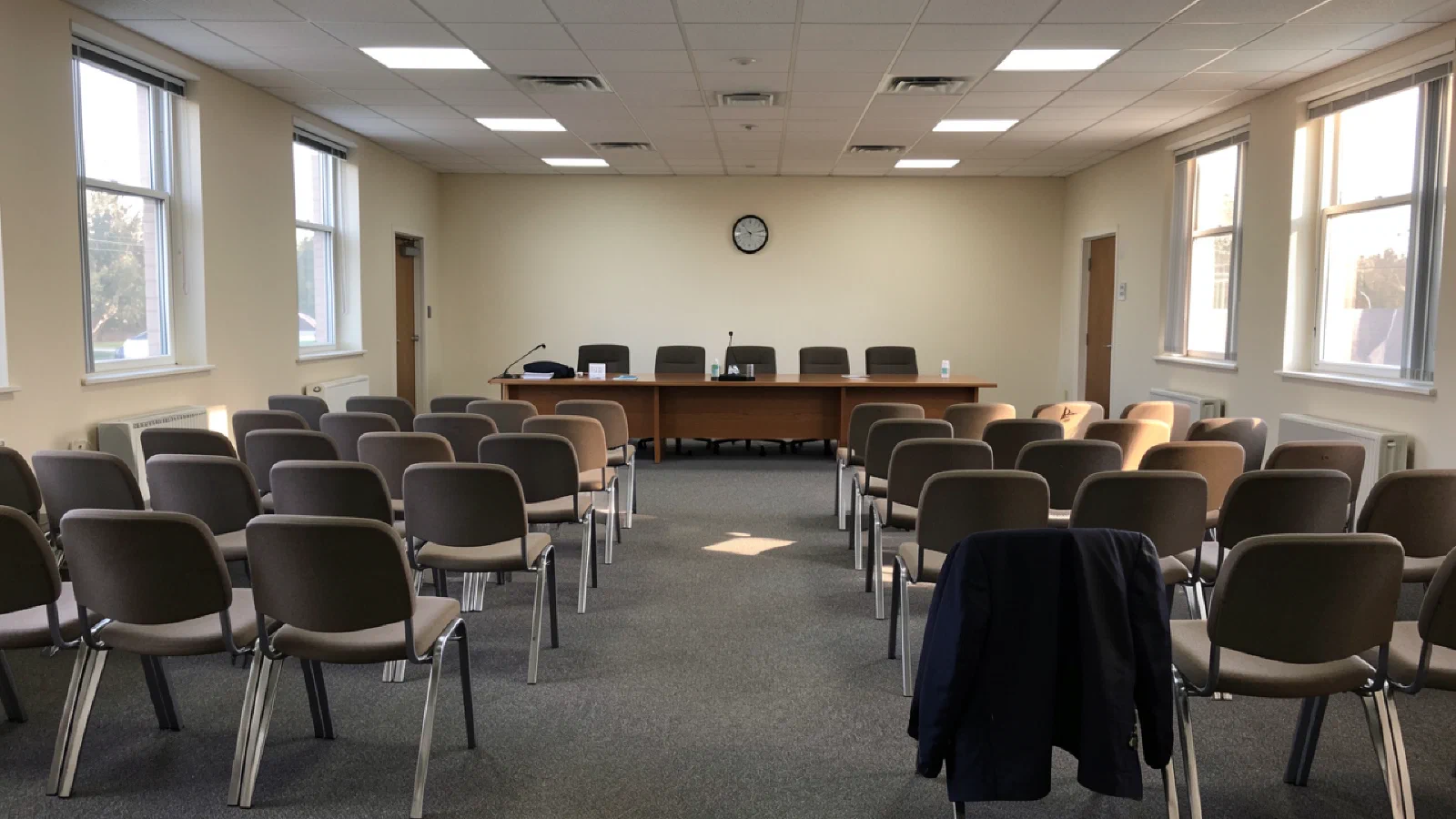
Barbara attended her first CalPERS investment committee meeting in October of last year. She did not know what to expect. The agenda covered private equity allocations, real assets, a review of the fund’s infrastructure investment framework. She sat in the public gallery and watched the board discuss real estate investment trusts and renewable energy allocations for ninety minutes.
At the public comment period, she stood up. She identified herself as a retired Fresno Unified teacher and a CalPERS beneficiary. She said she had one question: was the fund investing in the care infrastructure its members would need as they aged at home? She said she was 68, healthy today, and aware that the infrastructure she would need in ten years was being built or not built right now. She said she was asking because she was a beneficiary, because she would be a consumer of whatever that infrastructure produced, and because nobody in the room appeared to have connected those two facts.
The board chair thanked her for her comment. A staff member asked for her contact information. Three weeks later she received a call from a member of the fund’s ESG investment team, who told her that the fund did not currently have a dedicated allocation to aging-at-home care infrastructure but that her comment had been noted in the meeting minutes.
That is not a victory. It is a first step. Barbara is going to the January meeting.
The reader who is a public pension beneficiary has a voice in how her fund invests. This is not a civic abstraction. It is a specific, exercisable right that most beneficiaries do not know they have.
Finding your fund requires knowing which public pension system covers your retirement. Public school teachers are typically covered by state teacher retirement systems: CalSTRS in California, TRS in Texas, STRS in Ohio. State and local government employees are typically covered by funds like CalPERS, SERS in Pennsylvania, NYSLRS in New York. Federal employees have FERS and CSRS. The fund name is on your annual benefits statement.
Finding the investment committee requires navigating the fund’s website to its governance section. Most public pension funds post their board meeting schedules twelve months in advance. Investment committee meetings are typically quarterly. Agendas are posted before meetings. Minutes are published after. Public comment procedures are described in the fund’s bylaws, which are public documents.
What to say at a board meeting is a question Barbara has thought about since October. She recommends keeping it to three sentences. Who you are (a beneficiary, with years of service and location). What you are observing (that the fund’s beneficiaries are aging into the population that will consume the infrastructure the fund could be investing in). What you are asking (whether the fund has considered a specific allocation to aging-at-home infrastructure, care coordination platforms, or related categories).
You are not asking the board to make an investment decision in your comment. You are asking whether the connection between beneficiary population and investment category has been considered. That is a governance question, not an investment recommendation. The governance question is the one a beneficiary has standing to ask.
The time horizon of institutional investors matters more in this category than almost any other. A PE firm that acquires a care agency is working toward a four-to-seven-year exit. An endowment that allocates to aging care infrastructure is building toward a demographic wave that will peak over a twenty-to-forty-year period. A pension fund that invests in care coordination technology aligned with its own beneficiaries’ needs is making an investment whose return compounds over the same period as the members’ retirements.
The long time horizon is not a nice feature. It is the structural reason institutional capital is better aligned with aging care outcomes than private equity capital. The PE firm’s incentives bend toward extraction because the time horizon is short. The pension fund’s incentives bend toward durability because the time horizon matches the member’s life in retirement, not an investment cycle.
Barbara Nolan understood this after her October meeting. She is not an investor. She is a retired schoolteacher with a pension. But she understood that the fund managing her retirement has a financial interest in the infrastructure that will determine the quality of her retirement, and that nobody had previously connected those two facts in a CalPERS meeting, and that she was in a position to connect them because she is both a beneficiary and a future consumer of the thing the fund has not yet decided to invest in.
She is going to the January meeting. She is bringing three other retired teachers from the San Joaquin Valley. They each have three sentences prepared.
How this article connects to others in Blue Mirror.
Sources cited in this article.
- California Public Employees' Retirement System. Comprehensive Annual Financial Report, Fiscal Year 2023-24. CalPERS, 2024, .gov.
- Hess, David, and Tara Impink. "The Governance of Public Pension Funds: Social Investment, Beneficiary Interests, and Political Influence." American Business Law Journal, vol. 60, no. 2, 2023, pp. 289-344.
- Bagley-Keene Open Meeting Act. California Government Code Sections 11120-11132. California State Legislature, 2024.
- National Conference on Public Employee Retirement Systems. Public Pension Investment Report: Infrastructure Allocations 2024. NCPERS, 2024.
- Hoevenaars, Roy, et al. "Pension Funds and ESG: Aligning Beneficiary Interests with Long-Term Capital Allocation." Journal of Pension Economics and Finance, vol. 22, no. 4, 2023, pp. 471-490.