What Your Church, Your Y, and Your Library Can Do
Series 17: Who Decides What You Get
Janet Kowalski has been the branch manager of the Eastside branch of the Cedar Falls Public Library for fourteen years. She is 54, not close to retirement, and thinks about older adults constantly because they are the largest daytime population in her building and the population whose needs are growing fastest and being served least well by the technology infrastructure that is reshaping everything around them.
Three years ago, Janet began doing something the library’s official programming did not describe. She started keeping track of which of her regular older patrons had the digital skills to use the library’s computers comfortably, and she started connecting them — individually, quietly, through the kind of informal introductions librarians have always made — with patrons who did not. The retired electrical engineer who helped the retired seamstress learn to video-call her grandchildren in Phoenix. The retired teacher who started helping other patrons navigate the library’s digital health literacy resources. The retired accountant who offered, once a week, to sit with anyone who had a question about online banking security.
This is not a formal program. It is Janet doing what librarians do: seeing a gap and filling it with what she has, which is space, trust, and an understanding of who is in her building.
The community institutions in every American city and town — the public library, the YMCA, the neighborhood church, the community college — were not designed for the aging technology transition. They were designed for other purposes that remain valid: literacy, fitness, worship, job training. But the infrastructure they have built to serve those purposes is also, without anyone having planned it this way, exactly the infrastructure the aging technology transition needs.
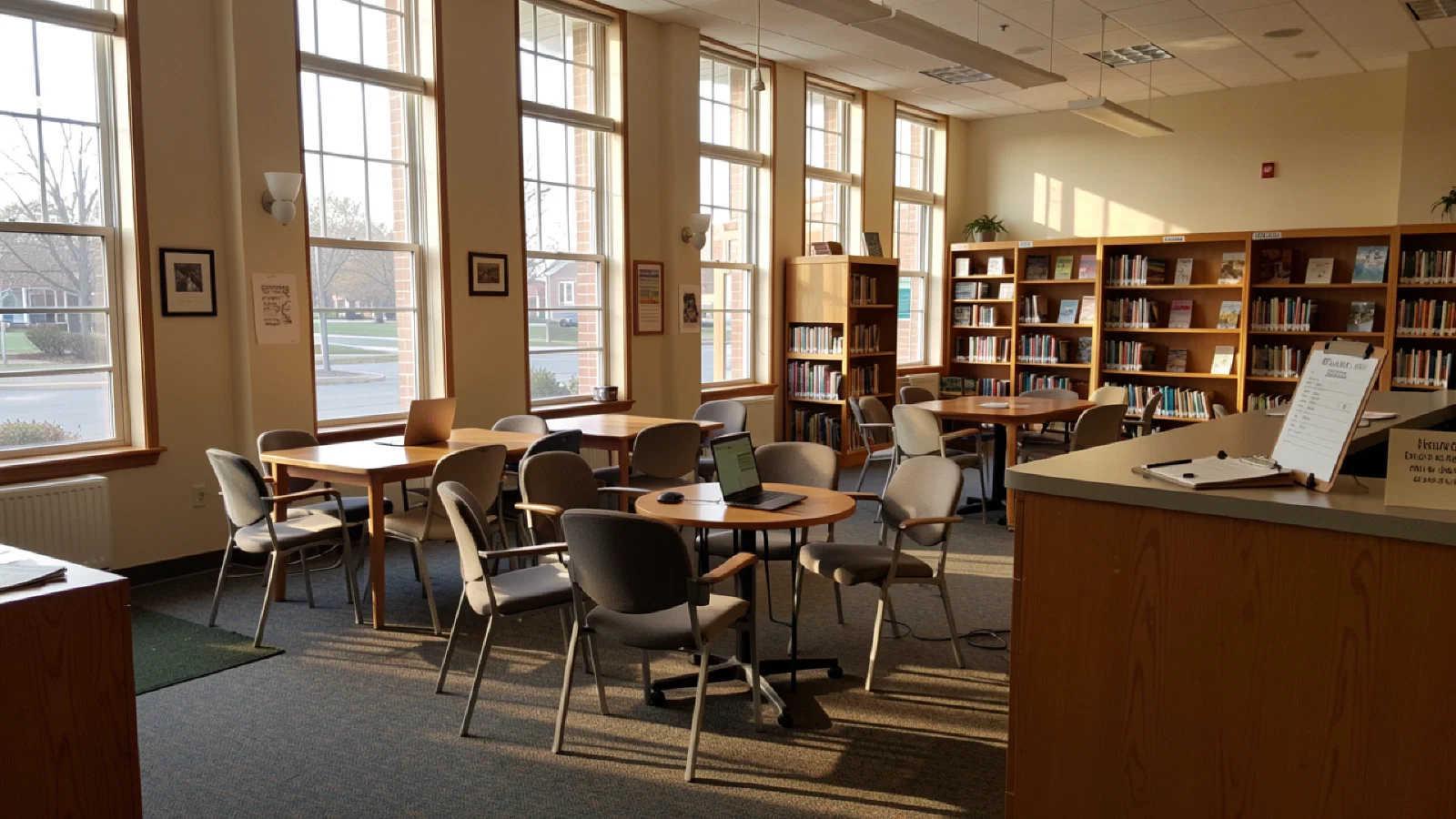
The library has broadband. It has computers. It has private rooms the retired teacher can use for a video tutoring session with a student in Seoul. It has staff trained in digital literacy. It has the institutional trust of the community it serves, built over decades of free, unconditional public access. The library does not need new infrastructure to host the digital dimension of what this publication has described in Series 9 and Series 11. It needs someone to connect its existing infrastructure to the people who need it.
The YMCA has physical space. It has programming infrastructure that runs everything from swim lessons to diabetes prevention. It has established relationships with health insurers, many of which fund Y memberships for Medicare Advantage enrollees under fitness and wellness benefits. It has a staff that understands behavior change and group programming. It has the institutional credibility to host intergenerational programming that a care technology platform cannot build from scratch. The Y that partners with a care coordination platform is not adding a new service. It is extending existing services to a use case the care platform cannot reach alone.
The church or synagogue or mosque has fellowship. It has the room where people gather after services, the volunteer coordination that has organized community care for generations, and the pastoral relationships that allow a clergy member to know, in a way that a care coordinator cannot, which member of the congregation stopped coming six weeks ago and why. It has an established trust network that is, in most communities, the most robust social infrastructure outside of family. The congregation that hosts a monthly intergenerational session where retired professionals share knowledge with younger members of the congregation is not inventing a new purpose. It is extending an ancient one.
Janet did three specific things that turned the Eastside branch into something larger than a library.
The first was a conversation with a broadband access coordinator at the city’s digital equity office. Janet learned that the library’s fiber connection — paid for partly through federal E-Rate program funding — was among the fastest and most reliable in the neighborhood. She arranged, through a process that required three meetings and a memo, to make one of the library’s smaller conference rooms available for remote work and remote learning sessions outside of normal programming hours, accessible by reservation through the library’s existing event system. This required no new funding. It required Janet understanding what she had and making it accessible.
The second was a conversation with the director of the local Area Agency on Aging. The AAA had a list of homebound older adults in the zip codes the Eastside branch served who had expressed interest in digital literacy programs but could not easily come to the library. Janet and the AAA director designed a hybrid program: library staff would go to three senior housing complexes twice a month; the library’s digital literacy coordinator would lead sessions; the AAA would provide transportation coordination for residents who could come to the library for deeper one-on-one help. This required a small grant from the state library system’s digital inclusion fund. It required two months of planning. It launched with eleven participants and grew to forty-three within a year.
The third was the conversation Janet has with new patrons who are retired professionals. She asks them, within the first few visits, what they did and whether they miss it. The answers are almost always the same: they miss the work, not the institution. They miss being useful, not the schedule. Janet now has a list of eighteen retired professionals who have offered, in various ways, to be useful in the library’s programs. Four of them are active contributors to structured knowledge sessions Janet hosts twice a month. Two of them have begun remote tutoring through the library’s internet connection on their own initiative, using the knowledge that the sessions helped them organize and the confidence the library’s environment gave them to offer it.
The reader who wants to activate her own community institution does not need a grant application. She needs three conversations and one sentence.
The sentence is: “I have been reading about aging technology and I think our [library/Y/church] has what it needs to connect older adults in our community to these tools. Would you be willing to talk about it?”
That sentence, delivered to the right person — the branch librarian, the Y’s senior program director, the pastor who runs the Tuesday morning fellowship group — opens a conversation that may go nowhere or may go somewhere, and the reader does not know which until she has the conversation.
The three conversations, if the first one opens a door, are with the program director to understand what already exists, with a community partner (the Area Agency on Aging, a local health system, the county’s aging services office) to understand what they are looking for, and with one other person in the institution who is likely to be an early adopter of whatever gets proposed. The reader who has read this series has the vocabulary to have all three.
What success looks like is not a formal program with a budget and a name. It is one session that works. One retired teacher who connects with one student through the library’s connection. One Y that adds a technology literacy session to its senior wellness programming. One fellowship hour that becomes a regular intergenerational exchange. From one thing that works, programs are built.
Janet is not doing anything heroic. She is using the resources she has, in the institution she runs, to serve the population in front of her. She noticed that the retired electrical engineer understood something the retired seamstress needed to know, and she introduced them. She noticed that the conference room sat empty on Tuesday and Thursday mornings, and she made it useful. She noticed that the Area Agency on Aging had a list of people it could not reach, and she called them.
The community institution that activates around the aging technology transition does not become a technology company. It becomes what it has always been, more fully: the place in the community where what people know and what people need can find each other. The library’s purpose is not disrupted by this. It is extended. The Y’s mission is not compromised by adding technology literacy to senior wellness. It is deepened.
The reader who walks into her library on a Tuesday morning and says the sentence to the branch librarian is doing what Barbara Nolan did at the CalPERS board meeting: she is bringing the question to the room where the answer can happen. The librarian who listens may be Janet Kowalski, or may not be. Either way, the question has been asked. That is where everything Janet built in Cedar Falls started.
How this article connects to others in Blue Mirror.
Sources cited in this article.
- American Library Association. Digital Literacy, Equity, and Libraries: ALA Policy Brief. ALA, 2024.
- YMCA of the USA. Healthy Aging in YMCA Programs: Evidence and Outcomes. YMCA of the USA, 2024.
- Institute of Museum and Library Services. Public Libraries Survey: Fiscal Year 2022. IMLS, 2023.
- National Council on Aging. Community-Based Organizations as Partners in Healthcare Delivery. NCOA, 2024.
- Federal Communications Commission. E-Rate Program: Funding for Schools and Libraries. FCC, 2024.