Where Your Food Comes From Now
Series 16: The World You Still Live In
Anita Reese’s doctor told her to eat more vegetables. Anita said she would try.
She did not tell her doctor that the nearest full-service grocery store is 3.2 miles from her apartment in Jackson, Mississippi. She does not drive. The bus route that passes her building goes downtown, not to the grocery store on the far side of the neighborhood. The Dollar General four blocks away carries canned goods, snacks, frozen meals, and no fresh produce. Anita has Type 2 diabetes and hypertension. Both conditions are managed, in significant part, by what she eats.
The doctor gave her dietary advice. The advice was medically correct. The vegetable aisle was 3.2 miles away and the system between Anita and that aisle was not the doctor’s problem.
What “Food Desert” Means at 76#
The term food desert describes a geography where access to affordable, nutritious food is limited by distance, transportation, and economic factors. It is a policy term. At 76, alone, without a car, the term is not policy. It is the walk to the Dollar General and the decision between canned peaches in syrup and no fruit at all.
The compounding effect is specific: Anita has two conditions that dietary choices directly affect. Both are currently controlled with medication. The dietary management that would reduce her medication load and her long-term risk is not available to her at four blocks away. It is available at 3.2 miles, requiring transportation she does not have.
Her doctor sees a patient with controlled diabetes and hypertension who says she is eating reasonably. The doctor does not see the Dollar General. The appointment notes say dietary counseling provided. The appointment notes do not say dietary access assessed.
What Delivers Now#
Grocery delivery has reached most metropolitan areas of the United States, and Jackson, Mississippi has options. Walmart Grocery, Instacart, and Amazon Fresh serve parts of the Jackson metro. The honest assessment: coverage depends on the specific address. A zip code lookup on each platform tells Anita whether her apartment is in the delivery zone.
If delivery is available, the cost structure matters on a fixed income. Instacart charges a delivery fee, typically $4 to $10, plus a service fee, plus a tip that the platform presents as optional but that drivers depend on. The effective premium over in-store prices runs 15% to 30% on many items. Walmart Grocery charges a lower delivery fee and often matches in-store pricing more closely. A Walmart Plus membership at $98 per year eliminates delivery fees on most orders; if Anita orders groceries more than three or four times per month, the membership pays for itself.
If Anita has a SNAP card, some delivery platforms accept it for grocery purchases, including Walmart and Amazon Fresh. The delivery fee must be paid separately, as SNAP does not cover fees, but the groceries themselves can be purchased with benefits. This closes a gap that existed for most of the history of SNAP; for years, online grocery purchase was not allowed. It is now, in most participating states.
Meals on Wheels and Congregate Meals#
If delivery from a grocery service is unavailable at Anita’s address, or if the cost premium is too high on her fixed income, meal programs designed for her age group exist and are often significantly more accessible.
Meals on Wheels delivers prepared meals to homebound and income-qualified seniors in most counties. In Jackson, the program is administered through the Area Agency on Aging and funded in part through the Older Americans Act. A hot midday meal and a cold evening meal are delivered five days a week. The cost is on a sliding scale based on income; for many participants at Anita’s income level, the cost is minimal or covered by program funding.
Congregate meal programs serve hot meals at senior centers and community sites on weekdays. These are often free or low-cost, and they provide social contact alongside food, which matters for a person living alone. The Jackson Council on Aging can provide site locations and schedules.
The waiting list for Meals on Wheels in many areas is real. Calling now is better than calling when the need is urgent.
Food as Medicine#
A set of programs is growing that makes the connection between diet and medical outcomes explicit enough to fund meals as a health intervention.
Medically tailored meal programs serve people with specific chronic conditions, providing meals designed around their medical dietary requirements. These are not standard meal delivery. They are clinically managed nutrition interventions delivered to the home. Some Medicare Advantage plans include medically tailored meal benefits, typically as a supplemental benefit with a defined number of meals per year. Anita’s plan, if she has a Medicare Advantage plan, may include this benefit. Calling the plan’s member services line and asking directly is the only way to know. Plans change these benefits annually.
Food prescription programs, often called produce prescription programs, provide vouchers for fresh fruits and vegetables through a prescription written by a healthcare provider. These are funded through a mix of federal grants, state programs, and health system initiatives. They are not universally available but are expanding. The local community health center and the Area Agency on Aging can say whether a program operates in Anita’s county.
The Technology That Helps and the Technology That Doesn’t#
Meal kit delivery services, which send pre-portioned ingredients with recipes for home cooking, were designed for two-income households with full kitchens, good knife skills, and an interest in weeknight cooking variety. For Anita, cooking for one, managing a chronic condition, and shopping on a fixed income, the value proposition is largely wrong. The per-meal cost is higher than grocery delivery. The portions are typically sized for two. The packaging generates significant waste. Meal kits are not, as a category, built for her situation.
Grocery delivery apps, as they currently exist, were designed for smartphone-fluent users who know what they want to search for, can navigate category menus, and trust screens with payment information. The setup process requires creating an account, entering payment information, and navigating an interface. This is where the daughter or the grandchild becomes the actual access mechanism, not the app.
The Collard Greens#
Three months ago, Anita’s daughter visited from Memphis and spent a Saturday afternoon setting up a Walmart Grocery account on Anita’s phone. She entered the payment information, set up the delivery address, walked Anita through placing an order, and made sure the first delivery arrived before she left.
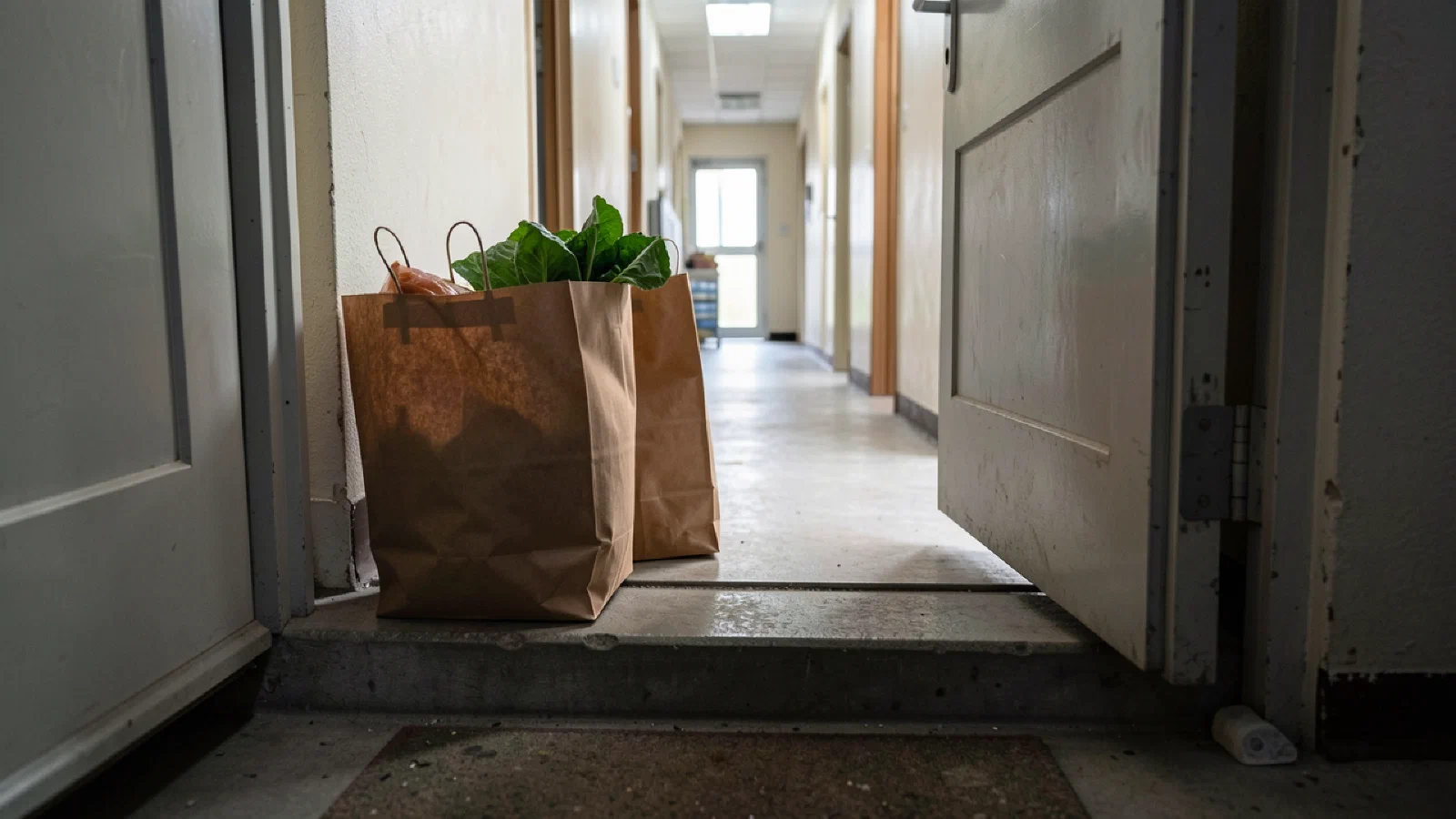
The following week, Anita ordered on her own. Fresh collard greens arrived at her door along with tomatoes, sweet potatoes, and a bag of frozen green beans. The vegetable aisle that was 3.2 miles away was now at the front door.
Her doctor does not know this happened. But the dietary changes are happening, and the next A1C will tell the story.
The technology that changed Anita’s food access was not agricultural innovation or a new delivery platform. It was her daughter, who had the digital fluency to set up an account and the Saturday afternoon to do it. The grocery delivery service was available for months before the daughter arrived. The barrier was not the technology. It was the bridge between the technology and Anita.
In most households where this works, the bridge is a person who cares enough to set it up. That is true of food delivery. It is true of banking apps, communication platforms, and ride-hailing services. The technology exists. The setup problem is a human problem, and the human who solves it is almost always a daughter.
How this article connects to others in Blue Mirror.
Sources cited in this article.
- USDA Economic Research Service. "Access to Affordable and Nutritious Food: Measuring and Understanding Food Deserts and Their Consequences." 2009.
- Meals on Wheels America. "Program Overview.".
- Centers for Medicare and Medicaid Services. "Medicare Advantage Supplemental Benefits.".
- Wholesome Wave. "Produce Prescription Programs.".
- USDA Food and Nutrition Service. "Online Purchasing Pilot." fns.usda.gov.