When the Supply Chain Breaks
Series 16: The World You Still Live In
The concentrator filter costs $12.
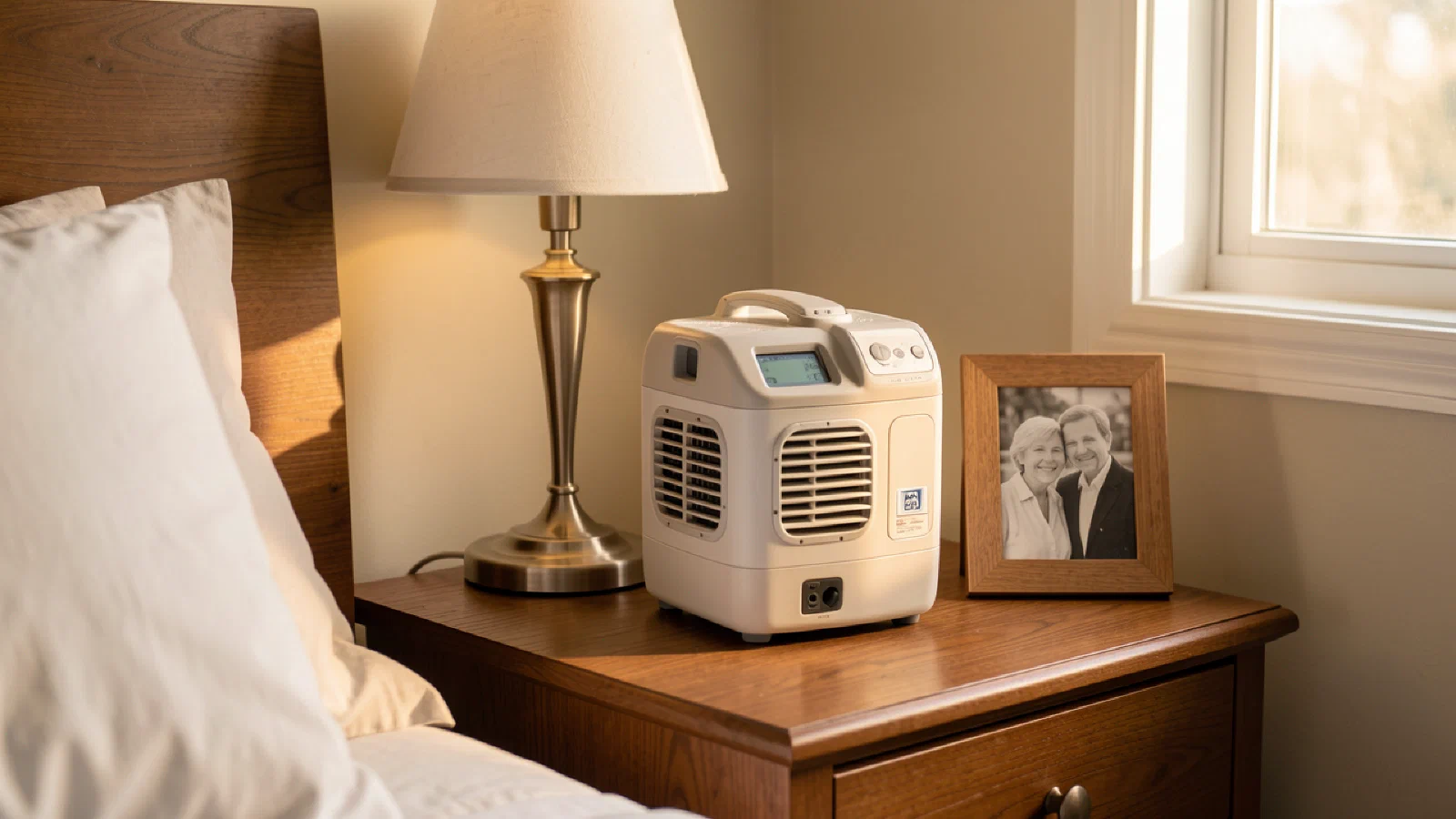
Lucille Moreno has used a portable oxygen concentrator for her heart failure management for three years. The filter needs monthly replacement. She ordered it the way she always did, from the same medical supply company she has used since her cardiologist prescribed the concentrator. The company told her it was backordered. No estimated date. They would contact her when it was available.
She ran the concentrator on the old filter for three weeks longer than the replacement schedule allows. The machine ran at reduced output. On the third day of the third week, Lucille was short of breath enough that her son drove her to the emergency department in Tucson.
She spent one night. The charges came to approximately $6,000.
A $12 filter became a $6,000 emergency because the supply chain for a single consumable broke and nobody in the system was watching.
Why Medical Supply Chains Break#
Lucille does not need a supply chain expert’s explanation. She needs to understand why her filter disappeared so she knows how to protect herself next time.
The medical device supply chain has consolidated significantly over the past two decades. Many device-specific consumables, the filters, tubing, and replacement parts for specific brands of medical equipment, are manufactured by a small number of suppliers, sometimes just one. When that supplier has a quality problem, a manufacturing disruption, or a shipping delay, the product disappears from every distributor simultaneously.
Compression stockings that have been available in the same style for years can become unavailable when the manufacturer changes its distribution arrangement. CPAP filters shift to a new supplier whose threading is slightly different from the old one. The insurer requires a reauthorization for the alternative product. Each step adds time. During that time, the person waits.
This is not rare. Drug shortages affecting hospitals have been increasing for years. Medical device supply disruptions have increased since 2020, when the pandemic exposed dependencies in global manufacturing that nobody had mapped from the patient’s perspective. The system is more fragile than it appears when supplies are available.
What the Reader Can Do Now#
The most effective protection against a supply disruption is the buffer.
Maintain a thirty-day supply of every critical consumable. If the filter is replaced monthly, order the next filter when the current one is two weeks old. If the insurance or supplier allows a ninety-day supply, request it. The buffer is the difference between a backorder that is an inconvenience and a backorder that is a health event.
Know the generic or alternative for every device-specific supply. The brand-name filter for Lucille’s specific concentrator model may be backordered. An aftermarket filter that fits the same housing may not be. Asking the medical supply company about alternatives before a shortage occurs is easier than asking during one. Asking the prescribing physician to document the alternative in the prescription is also easier before the emergency.
Keep a written record of every device’s exact model number, manufacturer, and supply specifications. When calling a supplier during a shortage, having this information at hand prevents the delays that come from looking up what machine she has. A card in the kitchen drawer with the model numbers is enough.
Register for backorder notification with the primary supplier. Most medical supply companies offer email or text notification when a backordered item becomes available. This requires asking.
Check the FDA’s drug shortage database at fda.gov/drugs/drug-shortages for medication-related supply problems. For medical device supplies, the FDA does not maintain a comparable consumer-facing database, but a physician’s office or medical supply company can often identify alternative sources that the patient-facing ordering system does not display.
What Technology Is Building#
The supply chain visibility that hospitals use to manage medical inventory is not yet available to individual patients. Hospitals know, in advance, that a product they depend on is running low in the distribution system. They order ahead. They source alternatives. The patient ordering from a home medical supply company has no visibility into that same distribution system until the product is gone.
The technology being built, in one-to-two-year range for commercial deployment, is supply chain monitoring at the individual patient level. A personal AI that tracks Lucille’s device consumables, monitors the supply chain status for each product she depends on, and alerts her to an emerging shortage before the backorder is posted. The same system triggers an alternative source search and, when appropriate, notifies her physician that a supply issue may affect her care.
That is a meaningful change. The difference between discovering a shortage when the product fails to arrive and being notified three weeks earlier, when alternatives are still available, is the difference between Lucille’s ER visit and a different filter.
The Medication Shortage Problem#
Drug shortages are increasing. The American Society of Health-System Pharmacists tracks drug shortages through ashp.org/drug-shortages, updated continuously. The FDA shortage database at fda.gov/drugs/drug-shortages lists active shortages with generic names, which helps identify whether the specific medication or a therapeutic alternative is affected.
For a person on maintenance medications for chronic conditions, the specific steps to reduce shortage vulnerability are parallel to the device supply steps: maintain a buffer, know the generic equivalent, know the therapeutic alternatives, and have that conversation with the prescribing physician before the shortage, not during it. Physicians can sometimes prescribe a therapeutic equivalent proactively when a shortage is anticipated. The pharmacist may know about an impending shortage before it affects the individual patient.
If a specific medication is on shortage and no alternative is available, the pharmacist and prescribing physician need to know this is affecting the patient. The medical record should reflect supply chain disruptions affecting adherence, for the same reason it should reflect geographic barriers: the healthcare system’s data about patient adherence is shaped by what clinicians document. If the system does not know that Lucille could not get her medication because of a backorder, it records her as non-adherent.
Lucille’s Concentrator#
The system that would have prevented Lucille’s ER visit would have known, three weeks before the backorder, that her filter manufacturer’s distribution network was showing stress indicators. It would have flagged her physician’s office and her medical supply company. She would have ordered an alternative filter at full supply. She would not have run the concentrator on an old filter for three weeks.
That system is being built. It is not available to Lucille today as a direct consumer service. What is available today is the buffer, the written record, the alternative sourcing question asked in advance, and the backorder notification setup.
The $12 filter. The $6,000 ER visit. The system that fails is a supply chain. The people who designed that supply chain did not design it from Lucille’s end. They designed it from the manufacturer’s end. The patient at the end of the chain has always been assumed to have flexibility that Lucille does not have. When the filter disappears, Lucille does not have the option of waiting.
How this article connects to others in Blue Mirror.
Sources cited in this article.
- American Society of Health-System Pharmacists. "Drug Shortage Statistics.".
- FDA. "Drug Shortages.".
- FDA. "Medical Device Shortages During COVID-19 Public Health Emergency." , 2022.
- GAO. "Drug Shortages: Gaps in FDA's Ability to Collect Timely and Accurate Data Hinder Oversight." , 2020.
- Institute for Safe Medication Practices. "Drug Shortage Guidance.".