The Store That Disappeared
Series 16: The World You Still Live In
Vivian Ostrowski has not complained about any of this. That is worth saying before the inventory of what disappeared.
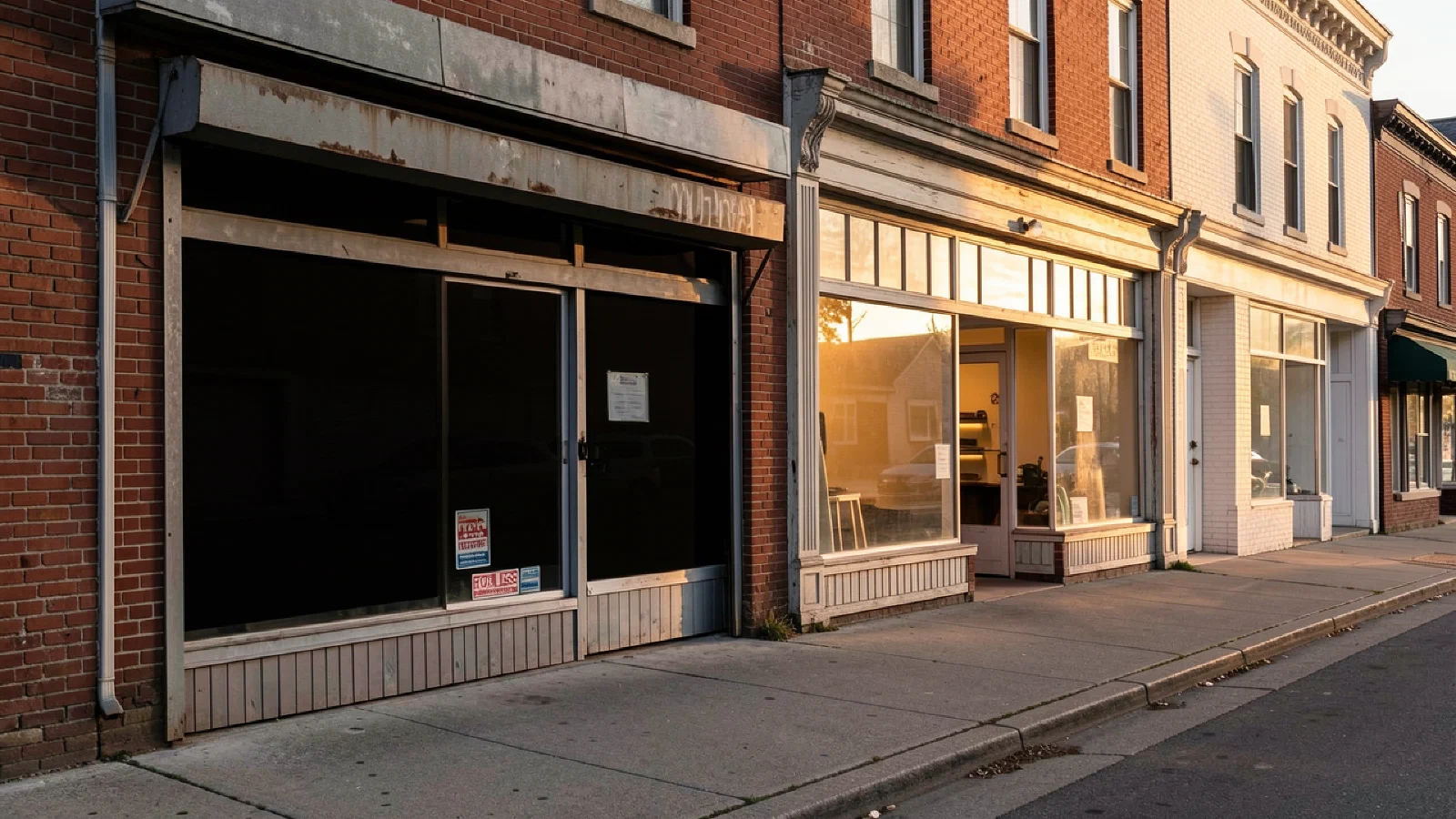
The Sears in Scranton where she bought her washing machine closed in 2018. The mall where she bought shoes and birthday gifts closed in 2021. The fabric store where she bought material for quilting closed in 2023. Her pharmacy moved from downtown to a strip mall two miles further from her apartment. The hardware store on Wyoming Avenue is a cell phone retailer now.
Vivian is 75. She worked as a secretary for twenty-nine years. She has adapted to every change her life required. She is not a person who resists. She is a person whose physical landscape has been systematically dismantled over seven years and who has not been given a map of what replaced it.
Her granddaughter spent a Saturday afternoon showing her how to order fabric online. Vivian now knows that the selection online is ten times what the fabric store carried, the prices are lower, and she has no reliable way to tell whether the color on the screen matches the color that will arrive in the package.
The Stores That Closed#
The retail transformation in American small and midsize cities over the past decade is not nostalgia. It is a structural shift that had specific consequences for specific people.
Department stores anchored regional malls, which anchored shopping centers, which were where pharmacies, shoe stores, clothing retailers, and specialty shops found their foot traffic and their rents. When the department stores closed, the malls closed, and the retail ecosystem that depended on them followed. The process was not fast. It happened store by store over about ten years, and for Vivian it was one closure every twelve to eighteen months, each one manageable, none of them individually catastrophic, and the cumulative effect was that her retail landscape contracted to a fraction of what it was.
What replaced those stores is available online. But “available online” and “accessible to Vivian” are not the same thing, and the gap between them is the actual story.
What Replaced Them#
E-commerce has matured into the default retail infrastructure for most product categories. Amazon carries most of what Sears carried. Zappos and Amazon carry shoes. Joann Fabrics and many specialty retailers offer fabric online. Chewy, CVS, and Walgreens ship pharmacy orders. Home Depot delivers hardware.
The practical guide to buying online starts with a few fundamentals that experienced online shoppers take for granted and that Vivian needed someone to explain.
Evaluating sellers: on Amazon, products are often sold by third-party sellers rather than by Amazon directly. The seller’s rating and the number of reviews matter. A seller with 4.7 stars and 2,000 reviews is more reliable than a seller with no rating history, regardless of how good the listing looks.
Returns: most online retailers offer thirty-day returns for a full refund on most items. The process requires printing a return label or dropping the package at a designated location. Understanding the return policy before purchasing matters for items where fit or color accuracy is uncertain.
Fake storefronts and scams: fraudulent websites that look like legitimate retailers have become sophisticated. The warning signs are prices far below market, websites with no verifiable contact information, and payment methods limited to wire transfer or gift cards. Sticking to established retailers, or verifying an unfamiliar site through a search for their name plus the word “scam,” prevents most of these losses.
The buying agent from Series 02 applies directly to routine purchasing. Vivian buys the same compression stockings every three months. The same vitamins. The same cleaning supplies. These are purchasing, not shopping. A personal AI that manages these orders automatically, on a schedule, from verified suppliers, removes them from the mental load of Vivian’s life. This capability is available now through a combination of subscription services and automated orders on platforms she already uses.
The Fabric Problem#
There are categories of retail where the online replacement is genuinely inadequate for what the in-store experience provided.
Fabric is one. The color on the screen is calibrated to the screen’s display settings. The physical fabric will be different enough that experienced quilters order samples before committing to yardage. Fabrics.com and Mood Fabrics and most serious online fabric retailers allow sample orders for a small fee. This is not as good as touching the fabric in the store. It is better than guessing from the screen.
Shoes are another. Fit varies enough across manufacturers that the return process is essentially part of the buying process for shoes purchased online. Ordering two sizes, keeping the one that fits, and returning the other is a normal strategy for people who buy shoes online. It requires the return process to be manageable, which it is for major retailers.
Gifts and items where the recipient’s preference matters are a third. Online selection is broader. The ability to hold the object and assess its quality is not available. Customer reviews substitute imperfectly.
The honest assessment of the fabric problem: the store that closed did something online retail cannot replicate, which is allow Vivian to touch the material, assess its weight and hand, and see its true color under store lighting. Online retail gives her ten times the selection and lower prices and a meaningful gap where the sensory assessment used to be.
What Still Exists in Person#
Local retail has contracted but not disappeared, and supporting what remains is not sentimental. It is practical.
Independent pharmacies serve communities where chain pharmacies have withdrawn. They often offer delivery and often know their customers. The relationship Vivian has with her pharmacist is not available from the mail-order service, and the pharmacist who knows her medication list catches interactions the automated system can miss.
Hardware stores and specialty retailers have survived in some markets by offering expertise and service that online retail cannot match. A hardware store that can tell Vivian which fastener works for her specific wall material is worth a trip.
Independent fabric stores exist in many cities, though fewer than a decade ago. Searching for local quilt shops through the American Quilter’s Society’s shop directory or through Yelp identifies what is near her. Some of these are an hour away. Some make the trip worth it.
Shopping Versus Purchasing#
The distinction that matters for Vivian’s daily life is between shopping and purchasing.
Purchasing is replenishment: the compression stockings, the vitamins, the detergent, the coffee. These are items Vivian has bought before, knows she will buy again, and does not need to evaluate at the time of order. Purchasing can and should be automated. A subscription, a standing order, or a personal AI that tracks when she is running low and places the order removes these from the mental space entirely.
Shopping is discovery and choice and sensory engagement. The fabric for the quilt. The shoes for a granddaughter’s wedding. The gift for a neighbor’s birthday. Shopping is a human activity that the store building used to contain and that now lives in a mix of online browsing, local stores where they exist, and occasional trips to places that are further away but worth it.
The technology that serves Vivian well handles purchasing. The technology that handles shopping is less adequate, and for the sensory categories where she most needs it, it is the least adequate. The AI that can show her ten thousand fabrics cannot tell her whether the teal in the photograph is the teal she is imagining.
Vivian’s Quilt#
She ordered the fabric online. Three colors, all from the same retailer. Two arrived close to what the screen showed. The third was noticeably more blue than the photograph. She made the quilt anyway, adjusting the placement of the mismatched fabric.
The quilt is beautiful. Her granddaughter has it now.
The store that closed did not take quilting from Vivian. It took the ease of buying the materials, the sensory confirmation before purchase, and the conversations with the store owner who knew what she was working on. Online retail replaced the access. It did not replace the ease or the conversation. The gap between access and ease is real, and closing it requires more than a better screen.
How this article connects to others in Blue Mirror.
Sources cited in this article.
- ICSC Research. "Understanding the Retail Apocalypse." , 2020.
- FTC. "Online Shopping." consumer.ftc.gov.
- AARP. "Consumer Fraud and Protection Resources.".
- American Quilter's Society. "Shop Locator.".
- National Community Pharmacists Association. "Community Pharmacy Finder.".