The Bank That Fits in Your Pocket
Series 16: The World You Still Live In
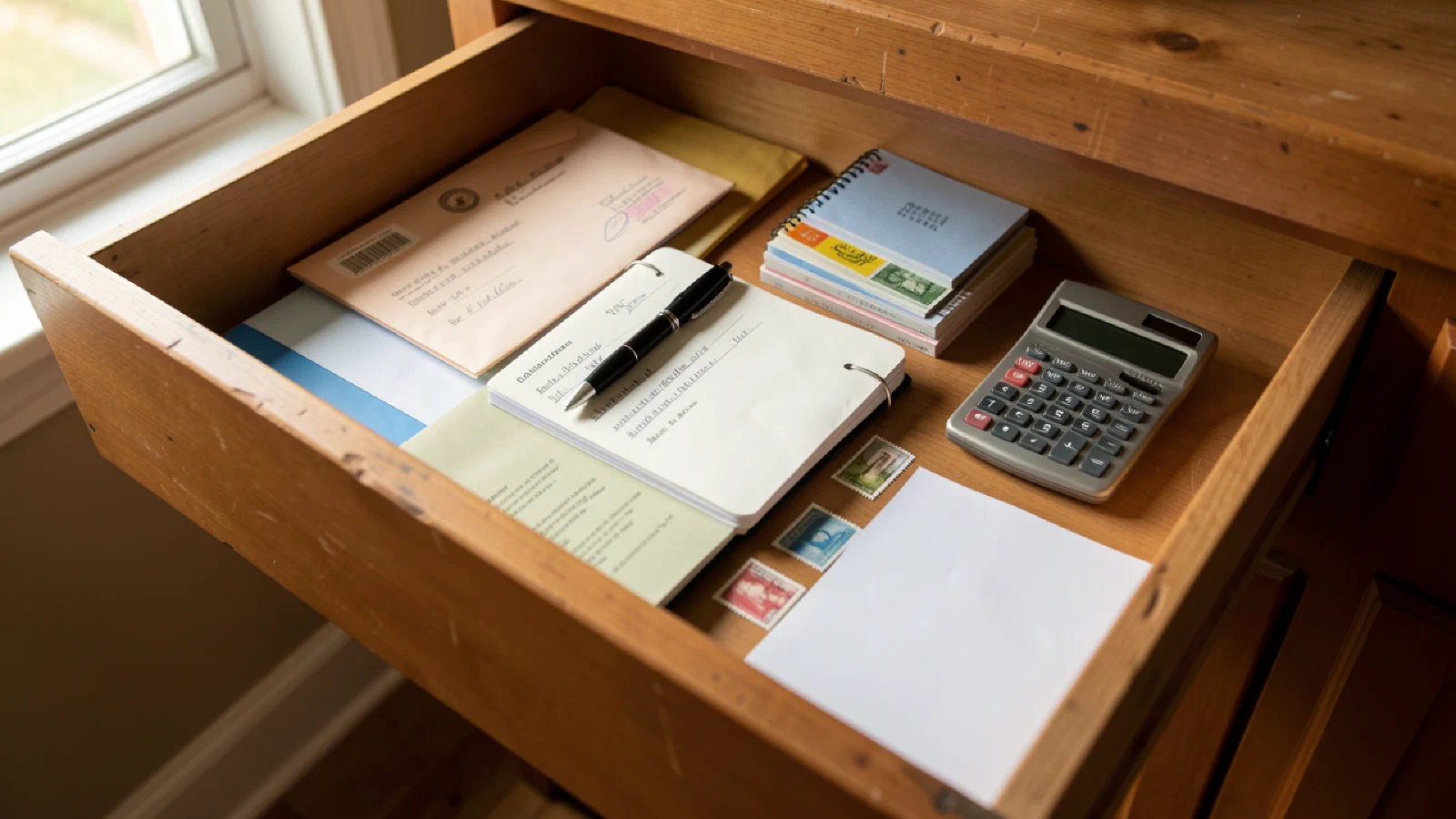
Dolores Kincaid has a system that works. Her Social Security arrives on the second Wednesday of the month: $1,943. She deposits it at the bank branch four blocks away. She pays her bills by check, from the checkbook she has used for thirty-one years. The paper bills go in the kitchen drawer until the fifteenth, when she sits down and writes the checks. The drawer also holds the password for the banking app her grandson set up on her phone last Thanksgiving. It is on a Post-it note because she cannot remember a password that is not the name of a street she grew up on.
She lost $200 in February. A text message looked like her bank. It asked her to verify her account by clicking a link. She clicked. The $200 was gone by the time she called the bank’s customer service line, which she reached after twenty-two minutes on hold.
She has not opened the banking app since.
Dolores is not confused about technology. She is prudent about money. The $200 was a lesson she will not repeat. The problem is that the lesson she drew from it, which was that the phone is dangerous, is not wrong enough to argue with and not right enough to leave alone.
What Fintech Is, at the Kitchen Table#
The venture capital version of financial technology: apps that disrupt banking, real-time payment infrastructure, AI-powered portfolio management, decentralized finance. None of this is relevant to Dolores.
The kitchen table version of fintech: tools that help her see where her $1,943 goes each month, pay her bills without driving to the bank or writing checks, detect when someone is trying to steal from her, and send money to her home care aide without going to the post office for a money order. This is relevant to Dolores, and some of it is available and better than her current system in specific ways.
The checkbook is not wrong. The kitchen drawer is not a failure. What they cannot do is show Dolores that the electric bill is going up each month and will eat her discretionary spending by March, or that a charge she does not recognize appeared on her account three days ago, or that the aide she pays in cash cannot document her wages properly for her own tax purposes. The checkbook is accurate. It is not proactive.
What Works Now#
Mobile banking from Dolores’s existing bank is the most accessible starting point, not because the app is well designed for her but because the account relationship already exists. What she needs from that app is specific and modest: see the balance, see recent transactions, get an alert when something unusual happens. Most major bank apps do these things. The problem is that the login process is friction enough to make the app feel dangerous every time she opens it.
Biometric login, where the app recognizes her face or fingerprint instead of requiring a password, exists on most current banking apps. If her grandson set up biometric login rather than a password, the Post-it note becomes unnecessary. That is a twenty-minute Saturday project.
EverSafe is a service designed specifically for elder financial protection. It monitors linked bank and investment accounts for patterns that suggest exploitation or fraud, alerts a trusted family member when anomalies appear, and requires no daily action from Dolores. The cost is around $8 to $15 per month. It is not a replacement for banking. It is a monitoring layer that does proactively what Dolores cannot do retroactively: watch for the $200 before it leaves.
Budgeting tools that connect directly to her bank account, the successors to the original Mint application, show her spending by category automatically, without her having to enter anything. On a fixed income of $1,943 with predictable expenses, this is not complex analysis. It is a picture of what happened last month that the checkbook does not provide.
The Scam Problem#
Elder financial exploitation is a multi-billion-dollar annual problem. The scam that took Dolores’s $200 was one category among several: the bank impersonation text. Others include the grandparent scam, the romance scam, the Social Security impersonation call, the prize notification, and the investment fraud that presents as a legitimate opportunity.
What makes this honest to say: the technology that protects against financial scams is the same technology that creates new attack surfaces. A banking app that alerts Dolores when an unusual transaction occurs is useful. A banking app that requires a password she writes on a Post-it note creates a vulnerability. The net calculation depends on the specific tools, the specific design decisions, and whether anyone building the tool thought about Dolores.
The scam detection available today is meaningful. AI-based transaction monitoring can flag patterns that do not match a person’s established spending habits, including transactions initiated from unfamiliar devices, transfers to new recipients in unusual amounts, and activity at unusual hours. This is better than no monitoring. It is not perfect.
What Dolores should know: her bank’s fraud line can add a callback confirmation requirement for any wire transfer or large payment to a new payee. That is a phone call to her bank’s customer service. It is available now. Nobody told her it existed.
Paying the Aide#
Dolores pays her home care aide in cash because she has not found a way to pay digitally that she trusts. The aide prefers digital payment for her own record-keeping and tax purposes. The mismatch costs both of them: Dolores makes a weekly ATM trip, the aide cannot easily document her income.
Three options exist that are simpler and safer than either cash or Dolores learning Venmo.
Zelle is integrated into most major bank apps and sends money directly between bank accounts using a phone number or email address. If Dolores’s bank supports Zelle, which most do, she can set up a transfer to her aide’s account with her grandson’s help, and then repeat it weekly from her phone. The setup requires one session. The recurring payment requires a few taps.
A paper check payable to the aide is more traceable than cash and provides documentation. It is also the method Dolores already knows. If the aide can deposit checks through her own banking app, the trip to the bank is eliminated for both of them.
Bill payment through her bank’s website can be set up for recurring payments to individuals as well as companies, through the bank’s own infrastructure rather than through a third-party app. Her grandson can help set this up. The payment comes from Dolores’s account on a schedule she sets.
What $1,943 Looks Like Under AI Management#
The personal AI that manages a fixed income does not require a complex financial situation. It requires knowing what comes in, what goes out, and what the pattern tells her about the month ahead.
The AI knows Dolores’s income: $1,943 on the second Wednesday. It knows her fixed expenses: rent, utilities, phone, insurance. It knows her medication copays and their schedule. On the first of the month, it tells her: after fixed expenses, you have $387 for food, personal care, and discretionary spending this month. Your medication copay of $74 is due on the seventeenth. You have spent $52 of your food budget through the sixth. That is financial clarity she has never had from the checkbook, not because the checkbook is wrong but because the checkbook shows what happened, not what is coming.
This is one to two years out as an integrated capability. The components exist. The system that combines them in a form designed for Dolores, with voice interface, large text, and her existing bank account as the foundation, is being built.
The Trust Gap#
Dolores lost $200 in February. She closed the banking app. The trust required to manage money digitally is different in kind from the trust required to order groceries online. The stakes are different. A wrong grocery order is inconvenient. A banking error is the medication copay.
What trustworthy fintech for someone in Dolores’s situation looks like is specific: biometric login instead of passwords, automatic fraud alerts sent to her grandson’s phone when anything unusual appears, transaction limits she sets herself for transfers to new payees, and the ability to cancel a payment within 24 hours if she did not intend it. These are design decisions, not technology limitations. The technology to do all of this exists. The design that does all of it thoughtfully, for a 71-year-old who lost $200 to a scam and has not opened her app since, is not universal.
The Drawer, Upgraded#
Dolores will not abandon the kitchen drawer. The checkbook will remain. The paper bills will arrive and be filed in the drawer until the fifteenth. That system has worked for thirty-one years and it will continue to work.
What can change is whether the drawer has a companion: a monitoring service that watches for fraud, a budgeting view that shows where the month is going before it is over, a biometric login that makes the app feel safe to open, and a payment option for the aide that does not require an ATM trip. The drawer and the digital layer are not in conflict. The drawer covers what it always covered. The digital layer covers what the drawer cannot see.
The technology is available. The design for Dolores is arriving, imperfectly, and the gap between what exists and what she can trust is closing. Not fast enough. But closing.
How this article connects to others in Blue Mirror.
Sources cited in this article.
- EverSafe. "How EverSafe Protects Seniors.".
- AARP. "Elder Financial Exploitation: Costs and Consequences." AARP Public Policy Institute, 2022.
- Consumer Financial Protection Bureau. "Money Smart for Older Adults.".
- Federal Trade Commission. "Protecting Older Consumers 2022-2023: A Report of the Federal Trade Commission." , 2023.
- Zelle. "How Zelle Works.".