When the Hospital Closed
Series 14: Geography Is Not Destiny
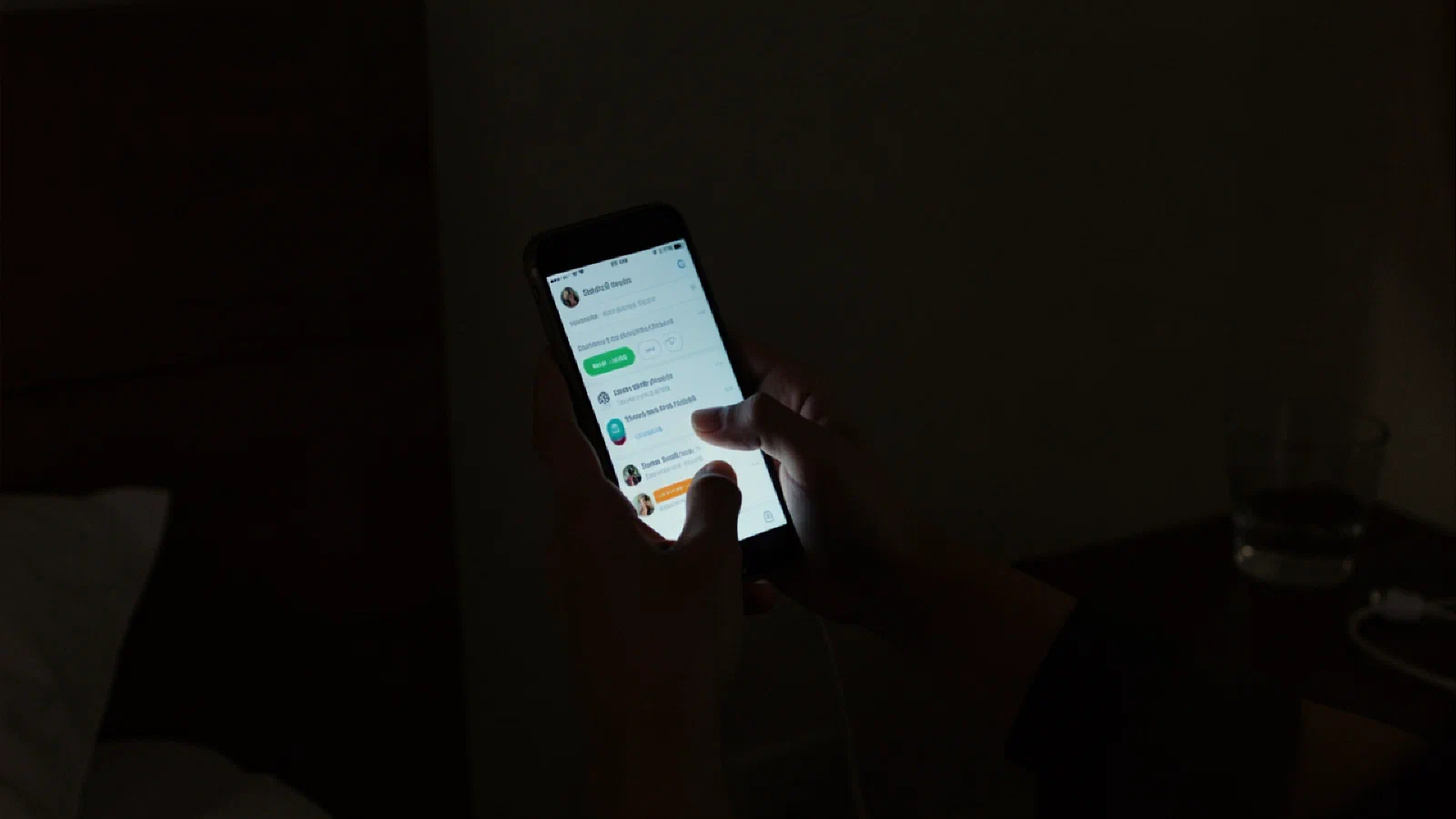
Earl Hanson’s health AI woke his wife at 2:14 AM on a Tuesday in February. Earl was 76, fourth-generation wheat on a farm in eastern Montana, and the alert on Mildred’s phone was specific: Earl’s overnight physiological data showed a pattern consistent with an emerging cardiac event. Not a guess. Not a general warning. A pattern the system had been trained to catch, running against six months of Earl’s baseline data, flagging a deviation that Earl himself had slept through.
Mildred called 911 at 2:17. The ambulance arrived at 3:04. Earl’s cardiac catheterization happened at 4:51 AM, 157 minutes after the alert. His cardiologist said afterward that the early warning had given them a window. Without it, Earl would have woken with symptoms, and in the time it took to recognize them, call for help, and wait for the ambulance, the window would have closed.
The nearest emergency room is 58 miles from the Hanson farm. It used to be 11 miles away. The critical access hospital that served their county lost its CMS designation in 2023 and closed. The 47 minutes between Mildred’s call and the ambulance’s arrival is the new math of healthcare in eastern Montana. The AI did not shorten the drive. It moved the starting line.
The Geography of Closure#
Over 180 rural hospitals have closed since 2010, and the pace is accelerating. The communities most affected are small towns in the South and Midwest: predominantly low-income, predominantly older, predominantly without the political weight to reverse the trend. Texas has lost more rural hospitals than any other state. Georgia, Tennessee, and Alabama follow. The closures cluster in counties where the population is shrinking, the tax base is eroding, and the remaining residents are older and sicker than the national average.
The clinical consequence of a hospital closure is not the loss of a building. It is the loss of the time that proximity provides. A heart attack treated within 90 minutes of symptom onset has a substantially different outcome than one treated at 150 minutes. A stroke treated within the first hour preserves brain tissue that a stroke treated at the third hour does not. A fall resulting in a hip fracture that receives surgical intervention within 24 hours has a measurably lower mortality rate than one that waits 48. Every mile between the patient and the hospital is time. Every minute of time is tissue. The math does not negotiate.
Earl’s county is not unusual. It is the pattern. The counties losing hospitals are the counties where the remaining population most needs them.
What the AI Does When There Is No Hospital#
The AI that woke Mildred is not a replacement for a hospital. It is a system that changes the timeline in a geography where the timeline has become the determining variable.
Early warning for cardiac events, strokes, and falls is the function that bought Earl his window. The AI runs against physiological baselines established over months, detecting deviations that the person cannot feel and that the emergency system cannot detect until a 911 call is placed. In a geography where the ambulance is 47 minutes away, the difference between a 2:14 AM alert and a 4:00 AM symptom onset is the difference between a catheterization lab and a funeral.
Urinary tract infection detection in older adults is a specific rural mortality driver that consistent monitoring can intercept. UTIs in older adults frequently present not as urinary symptoms but as confusion, agitation, or falls. Without monitoring, they progress to sepsis. Sepsis in a geography where the nearest ER is an hour away is a death sentence that a $200 monitoring system could have prevented. The AI catches the UTI at the infection stage. The antibiotic is prescribed through telehealth. The sepsis never develops.
Medication adherence monitoring fills the gap between quarterly FQHC visits. The physician sees Earl four times a year. The medication adherence AI runs daily. It knows whether Earl took his statin, whether the dosage timing has drifted, whether two medications are being taken together that should not be. It does not replace the physician. It makes the 90 days between visits visible.
Telehealth preparation is the function that makes the 30-minute video appointment as productive as the 60-minute in-person one. The AI that prepares the physician with complete data, trends over time, medication history, and flagged concerns before the appointment begins means the physician is not spending the first 15 minutes of a remote visit asking questions the AI has already answered.
The Honest Limit#
Earl’s health AI requires reliable connectivity to sync with clinical systems, receive updated medication databases, and coordinate with the cardiologist’s office. In eastern Montana, satellite internet is available. It is expensive. It is less reliable in winter, when ice and snow degrade the signal that the low-earth orbit satellites depend on. The AI that saved Earl requires infrastructure that most rural households in his geography cannot guarantee.
The cost is not trivial. Satellite internet runs $120 to $200 per month in most rural areas. The health monitoring devices run $15 to $50 per month depending on the configuration. The total cost of the system that gave Earl his 47-minute window is roughly $200 per month, in a geography where the median household income is below the national average and declining. The technology works. The economics are not solved.
Telehealth as Partial Replacement#
Telehealth has become a genuine resource in rural healthcare, and the piece would be dishonest to dismiss it. Specialist access that would otherwise require a four-hour drive is available through a screen. Follow-up visits that do not require physical examination work well in video format. Mental healthcare, which is catastrophically undersupplied in rural America, has found in telehealth its most effective distribution model.
What telehealth does poorly is equally specific. Physical examination. Diagnostic imaging. Emergency intervention. The screen cannot palpate an abdomen, listen to a murmur through a stethoscope placed by trained hands, or set a broken bone. Telehealth is a real resource. It is not a hospital.
The reimbursement landscape has improved. Federal policy now reimburses most telehealth visits at parity with in-person care for Medicare beneficiaries, a change accelerated during the pandemic and largely maintained since. For the rural patient, the practical consequence is that the specialist 200 miles away is now accessible without the drive. The specialist’s hands are not.
The Resource Most Rural Patients Do Not Know About#
Federally Qualified Health Centers serve patients regardless of ability to pay, on a sliding-scale basis. They exist in most rural counties. Most rural patients do not know they exist.
There are roughly 1,400 FQHCs serving 30 million patients annually across the country. They provide primary care, dental care, mental health services, and pharmacy services. They accept Medicare, Medicaid, and uninsured patients. The sliding fee scale means that a patient at 100 percent of the federal poverty level pays a fraction of what a patient with commercial insurance pays at a private practice.
The benefits navigation agent described in Series 2 of this publication should be connected to the FQHC database. In most configurations, it is not yet. The agent that can identify the nearest FQHC, confirm which services it offers, determine whether it has capacity, and schedule an intake appointment is technically feasible today. The integration that makes it standard is one to two years away. When it arrives, the rural patient who has been driving 90 minutes to a primary care physician will discover that a sliding-scale clinic exists 20 minutes from home and has been there for years.
What Community Health Workers Add#
The community health worker who visits Earl monthly is the human infrastructure complement to the AI. She checks the things the AI cannot see: the pile of unopened mail on the kitchen table, the food in the refrigerator that has not been touched, the look on Mildred’s face that says the caregiving is getting heavier. She manages Earl’s telehealth scheduling, ensures his devices are charged and connected, and connects him to FQHC services he did not know he qualified for.
She serves fourteen patients across three counties. If the AI handled the data management between visits, the routine check-ins, the medication adherence monitoring, the appointment preparation, she could serve twenty-eight. The AI does not replace the community health worker. It doubles her reach. In a geography where there are never enough hands, doubling the reach of the hands that exist is the intervention that scales.
Community health worker programs are funded unevenly across states. Some states fund them through Medicaid. Some fund them through public health grants. Some do not fund them at all. The person reading this in a state with a CHW program may not know the program exists. The person reading this in a state without one has identified the gap that their legislature has not filled.
The 47 Minutes#
Earl is home. The catheterization was successful. He is back in the wheat fields when the weather permits, which in eastern Montana means he watches the weather as carefully as he watches his phone. The AI is still running. It has been running every night since February, comparing tonight’s data against last night’s, last week’s, last month’s. The 47-minute window it created will exist again if it needs to.
The hospital is still 58 miles away. The AI did not move it closer. What it did was change the question from whether Earl would know in time to how early he would know. In a geography where time is the variable that determines whether the ambulance arrives before or after it matters, knowing early is not a convenience. It is the architecture of survival.
Mildred keeps her phone on the nightstand now. She did before, but now she keeps it charged, volume up, and she has tested the alert tone so she knows it in her sleep. She is 74 years old. She has farmed this land with Earl for 51 years. She is not relying on technology to save her husband. She is using a tool that gives her the time the geography took away.
How this article connects to others in Blue Mirror.
Sources cited in this article.
- Chartis Center for Rural Health. "The Rural Health Safety Net Under Pressure: Rural Hospital Vulnerability." Chartis, February 2020.
- Gujral, Kritee, and Ateev Mehrotra. "Patterns of Rural Hospital Closure and Associated Access to Care Effects." JAMA Internal Medicine, vol. 180, no. 11, 2020, pp. 1511-1518.
- Centers for Medicare and Medicaid Services. "Critical Access Hospitals." , 2024.
- Health Resources and Services Administration. "Health Center Program: Impact and Growth." HRSA, 2024.
- National Rural Health Association. "About Rural Health Care." NRHA, 2024.