The Suburban Trap Revisited
Series 14: Geography Is Not Destiny
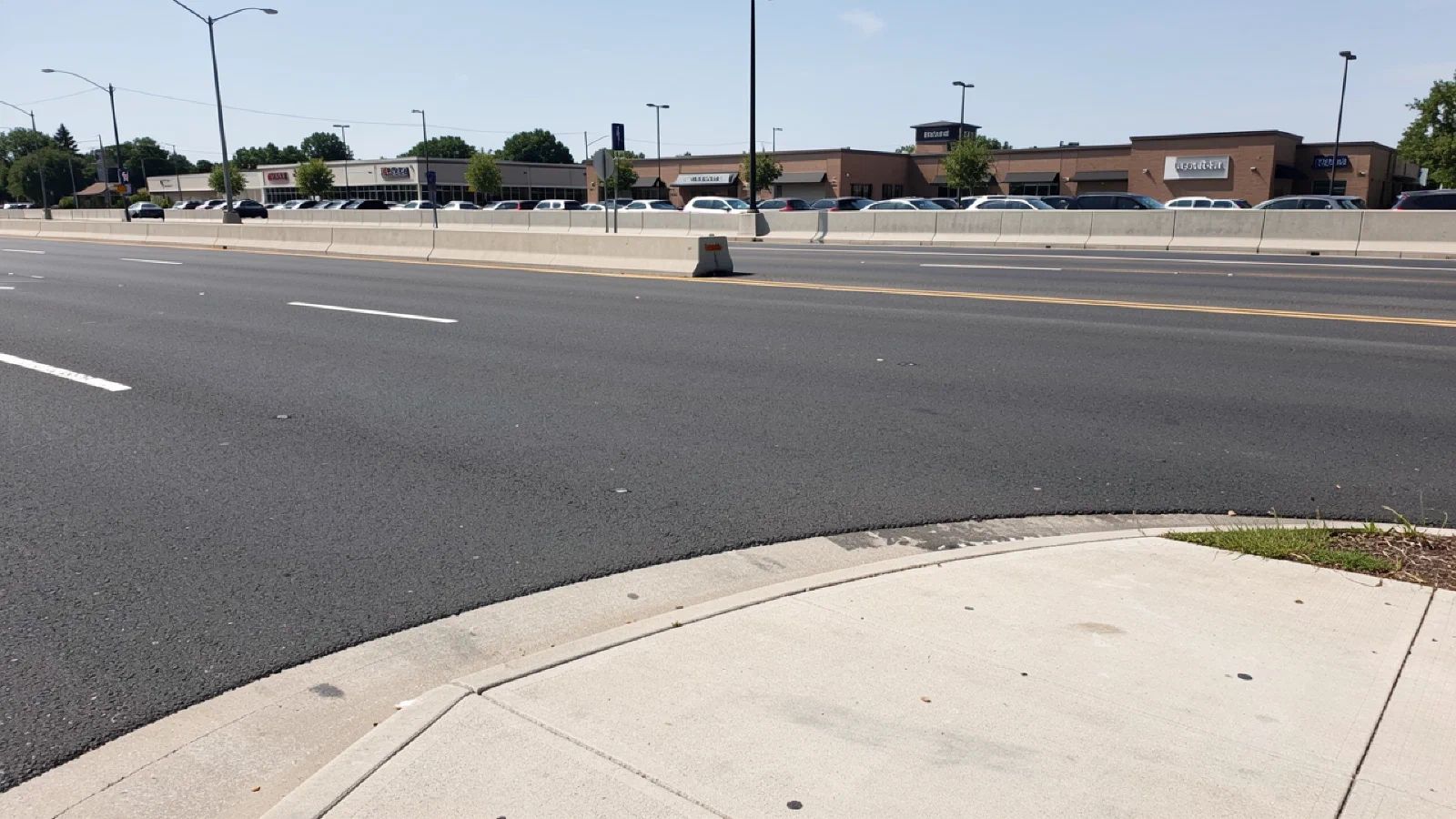
Barbara Fitzgerald has not left her house in eleven days. She is 73, lives in Scottsdale, Arizona, and she is not sick, not immobilized, not afraid of the outdoors. She has broadband. She has a smartphone. She has a car in the garage that she stopped driving eight months ago after the second time she misjudged a left turn across traffic on Shea Boulevard. The grocery store is 4.2 miles from her front door, across a six-lane arterial with no pedestrian crossing for a quarter mile in either direction. The nearest pharmacy is 3.8 miles away. The nearest bus stop is 1.1 miles away, and the bus runs twice a day.
Her AI has ordered her groceries, refilled her prescriptions, and prompted her three weekly calls to her daughter in Portland, her sister in Tucson, and her friend Carol who lives four miles away in a community that might as well be on a different continent for all the good the proximity does. This week Barbara has had seventeen digital interactions and zero in-person ones. Her AI is doing everything it can do. What it cannot do is give her somewhere to walk to.
The Design That Aged Badly#
The American suburb was designed for a specific household: a family with two cars, two incomes, and children who would be driven to school, soccer, and the mall. The design assumed that every adult in the household could drive, would always be able to drive, and would want to drive to every destination. The strip mall surrounded by a parking lot. The grocery store accessible only by car. The six-lane arterial connecting residential neighborhoods to commercial ones with the assumption that the connection would be made at 45 miles per hour inside two tons of steel.
The design worked for the household it was built for. Barbara was that household in 1987. She is not that household now. The suburb did not age with her. It was not designed to.
Scottsdale is not unusual. It is the pattern. American suburbs built between 1950 and 2000 share the same DNA: low density, car dependency, separated land uses, minimal pedestrian infrastructure. The communities that have retrofitted for walkability and transit access are the exception. The communities that have not, which is the majority of suburban America, are producing Barbara’s eleven days at an accelerating rate as their populations age.
The average American suburb has a Walk Score below 30, meaning that almost all errands require a car. For a 73-year-old who no longer drives, a Walk Score of 28 is not an inconvenience. It is a sentence.
What the AI Handles#
The technology workarounds for Barbara’s built environment are real and they are working. The piece would be dishonest to dismiss them.
Grocery delivery, coordinated through the agent described in Series 2, is functional, available, and effective. Barbara’s AI orders groceries based on her dietary patterns, her physician’s recommendations, and her preferences. The groceries arrive at her door. She does not need to cross the six-lane arterial to eat.
Pharmacy delivery is increasingly available in her market. Her prescriptions arrive by mail or courier. The AI manages the refill schedule, checks for interactions, and coordinates with her physician when dosage changes are needed. She has not been inside a pharmacy in four months.
Ride-sharing with assistance is available for the person comfortable navigating the app. Barbara is comfortable with it. She uses it for medical appointments and, occasionally, to visit Carol. The cost adds up. Two rides per week at $15 to $25 each is $150 to $200 per month for the transportation that a car provided for the cost of gas.
Social connection through the AI, as Series 8 addresses, monitors Barbara’s interaction patterns and prompts connection when the pattern drops below her baseline. The three weekly calls are not spontaneous. They are prompted. Barbara knows they are prompted. She makes them anyway, because the alternative is not making them.
The AI has reduced the consequence of the built environment failure without changing the built environment. Barbara eats well, takes her medications on schedule, sees her physician regularly, and talks to her family three times a week. By every metric the AI can measure, she is managed. By the metric it cannot measure, she has not touched another human being in eleven days.
What the AI Cannot Do#
The AI cannot give Barbara somewhere to walk to. This is not a software limitation. It is a concrete-and-asphalt limitation. The pedestrian crossing that does not exist at the arterial near her house is a municipal infrastructure decision. The bus that runs twice a day is a transit funding decision. The strip mall designed for cars and surrounded by parking lots is a zoning decision made in 1993. The AI works within the built environment. It cannot redesign it.
The AI cannot provide the ambient social contact of a walkable neighborhood. The chance encounter at the corner store. The wave from a neighbor also walking to the post office. The conversation that starts because two people are occupying the same sidewalk at the same time. These encounters are the product of density and pedestrian infrastructure, not software. Barbara’s neighborhood has neither.
The AI cannot replace the physical exercise that walking produces. It can prompt Barbara to exercise indoors. It can connect her to chair yoga videos and guided stretching programs. It cannot replicate the 30-minute walk to the grocery store that a person in a walkable neighborhood gets as a byproduct of daily life rather than a scheduled intervention.
The AI cannot create spontaneous human encounters. It can schedule calls. It can arrange rides. It can connect Barbara to online communities. It cannot manufacture the experience of being in a place with other people, which is what a walkable commercial district provides and what a six-lane arterial does not.
The Village Network#
The Village to Village Network, introduced in Series 10 of this publication, is a partial response to the suburban isolation Barbara experiences. Villages are member-driven, community-based organizations that provide transportation, mutual aid, social programming, and volunteer coordination within existing suburban built environments. They do not change the built environment. They work around it.
A Village in Barbara’s area would coordinate volunteer drivers for grocery trips and medical appointments, reducing both the cost and the isolation of ride-sharing. It would organize social gatherings in members’ homes or community spaces, creating the in-person contact that delivery services eliminate. It would provide a phone tree for daily or weekly check-ins, adding human voices to the AI’s digital prompts.
Villages require organizing, membership fees (typically $300 to $600 per year), and sustained community commitment. They are not available everywhere. They are available in over 350 communities nationally and growing. Where they exist, they address the isolation problem more completely than technology alone because they produce what technology cannot: someone at the door who knows your name.
What Retrofit Looks Like#
The built environment changes that would reduce Barbara’s isolation are specific and, in most cases, not expensive relative to the transportation infrastructure budgets that produced the problem.
Pedestrian crossings at arterials near senior housing. Barbara’s arterial has no safe crossing for a quarter mile. A signalized crossing with adequate walk time and a median refuge island costs a municipality between $200,000 and $500,000. The six-lane arterial it crosses cost tens of millions to build.
Bus routes connecting senior neighborhoods to grocery and medical services. The bus that runs twice a day past Barbara’s stop could run six times a day for an annual operating cost increase that most suburban transit agencies could absorb. The twice-daily schedule was set when the route’s primary riders were commuters. The riders now are older adults who need the bus at 10 AM, not at 7 AM and 5 PM.
Trail connections from residential streets to commercial districts. Many suburban communities have disconnected street networks where residential cul-de-sacs are separated from commercial streets by a wall or a drainage channel that pedestrians cannot cross. A pedestrian connection through that wall, a gap, a gate, a short path, costs less than a single intersection improvement and reduces walking distance by a mile or more.
These are municipal decisions. They cost money. They require political will that is not reliably present. The WHO Age-Friendly Cities framework and AARP’s Network of Age-Friendly Communities, which has enrolled over 700 communities in the United States, provide the design standards that would prevent Barbara’s eleven days. The communities that have moved from enrollment to implementation, from a plan on paper to a crossing at the arterial, are the communities where her count would not reach eleven. They are not yet the majority.
Barbara’s Street#
Barbara’s street has eleven houses. She knows two of her neighbors by name. She has lived on the street for fourteen years. The neighbor to her left, who moved in six years ago, has waved twice. The neighbor to her right is a couple in their forties with two children she has seen but never spoken to. The street has no sidewalk. It ends in a cul-de-sac that connects to nothing.
The AI that manages Barbara’s groceries, refills her prescriptions, prompts her calls, and monitors her social isolation metrics is a better neighbor than ten of the eleven houses on her street. That is the condition the suburban design created. It is the condition the AI is working within. It is the condition that no algorithm can fix, because the problem is not information or logistics. The problem is concrete.
How this article connects to others in Blue Mirror.
Sources cited in this article.
- AARP. "Network of Age-Friendly States and Communities." AARP Livable Communities, 2024.
- World Health Organization. "Age-Friendly Cities Framework." WHO, 2007.
- Walk Score. "Walk Score Methodology." , 2024.
- Village to Village Network. "About the Village Movement." , 2024.
- Transportation Research Board. "Pedestrian Safety at Intersections." National Academies Press, 2019.