Broadband Is Healthcare
Series 14: Geography Is Not Destiny
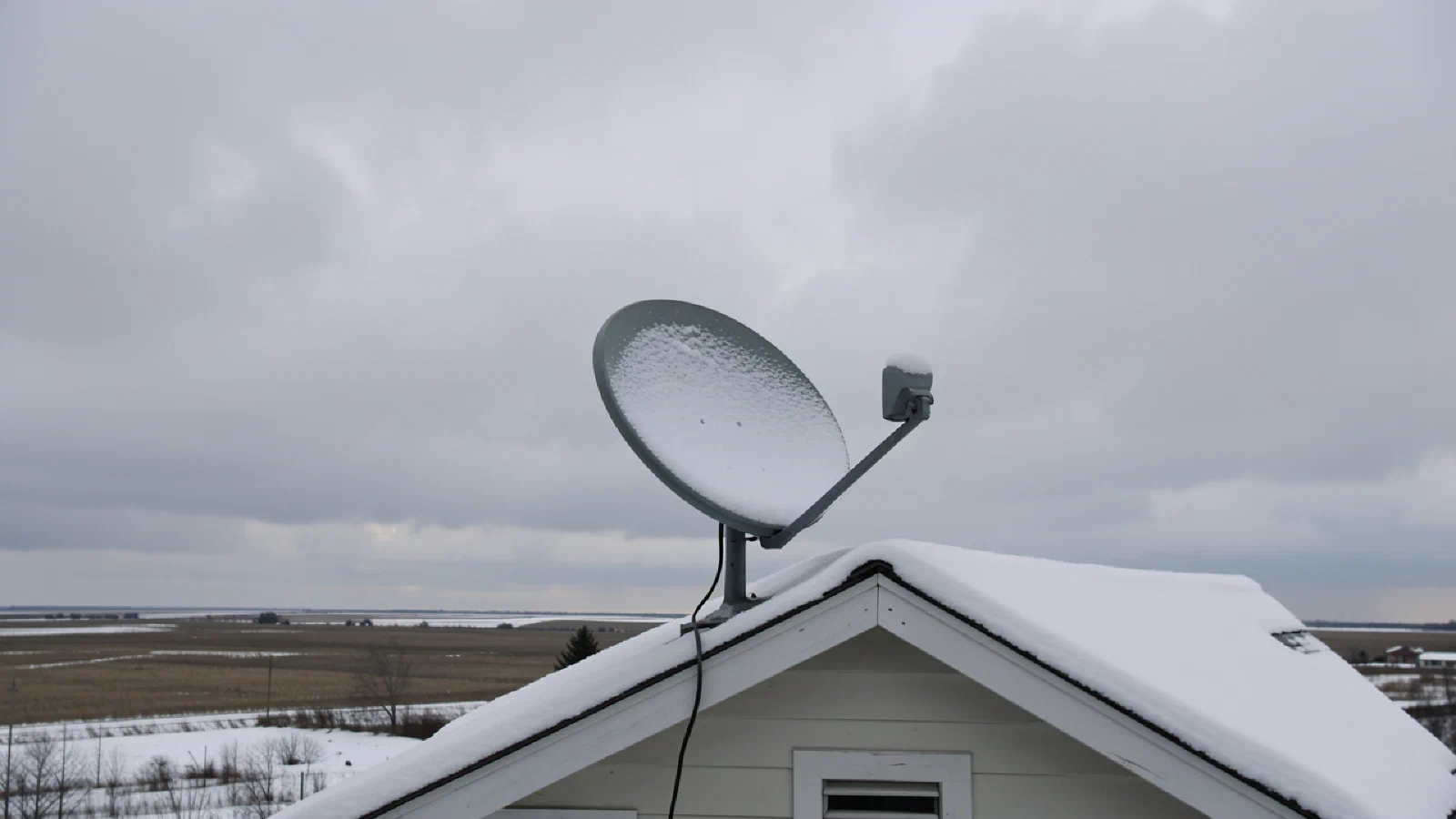
Agnes Littlefeather checks the sky the way her grandmother checked the sky, but for different reasons. Her grandmother read the clouds for planting and harvest. Agnes reads them for bandwidth. She is 69, living on a reservation in South Dakota, and her satellite internet connection is reliable when it is not raining, snowing, or windy. In South Dakota, that eliminates roughly a third of the year.
When her satellite connection drops, her health AI shifts to offline mode. The transition is not dramatic. There is no alarm, no error screen. The medication reminders continue because they run locally. The wearable on her wrist keeps recording her blood pressure, blood oxygen, and movement patterns, storing the data on the device until the connection returns. What stops is everything that makes the data useful in real time. No cloud-based pattern analysis comparing tonight’s readings to the last six months. No communication with her diabetologist 200 miles away. No emergency coordination through the AI. No updated medication interaction checks.
When Agnes’s connection goes down, she manages Type 2 diabetes, hypertension, and moderate COPD with a clipboard and a landline. She has done it before. She can do it again. The question is why she has to.
What the AI Needs to Function#
The health AI described throughout this publication requires connectivity the way a hospital requires electricity. The comparison is not rhetorical. Without connectivity, the AI’s most consequential functions fail in the same order a hospital’s functions fail during a blackout: the most critical systems go dark first.
Real-time monitoring sync, the function that transmits Agnes’s physiological data to the clinical system for analysis, requires relatively low bandwidth. A few kilobytes per reading. In theory, this should work on almost any connection. In practice, the sync requires a stable connection, not just a fast one, and satellite connections in severe weather are intermittent rather than merely slow. A reading that transmits halfway and fails is worse than a reading that does not transmit at all, because the system may record it as received when it was not.
Cloud-based pattern analysis, the function that caught Earl Hanson’s cardiac event in 14.01, requires moderate bandwidth and is sensitive to latency. The algorithm compares tonight’s data against months of baseline. That baseline lives in the cloud. When Agnes’s connection drops, the comparison stops. Local processing on the device can run basic threshold checks: blood pressure above a set number, blood oxygen below a set number. It cannot run the multi-variable trend analysis that distinguishes a bad night from an emerging crisis.
Telehealth video, which Agnes uses quarterly with her diabetologist, requires high bandwidth and stable latency. Her quarterly appointments happen in the months when the connection holds. They do not happen in February.
Emergency AI coordination, the function that woke Mildred Hanson, requires moderate bandwidth and extremely low latency. A cardiac alert that takes 90 seconds to transmit is a cardiac alert that arrives 90 seconds late. In an emergency, 90 seconds is not a rounding error.
The hierarchy is plain. As connectivity degrades, the highest-value functions are the first to fail.
What Offline Mode Can Do#
The offline mode that Agnes’s AI runs during her connectivity gaps is a meaningfully degraded version of the health AI. It is better than nothing. It is not what she needs.
Medication reminders run on local processing. They work. Agnes takes her medications on schedule during offline months as reliably as during online months. The reminder function does not require the cloud.
Basic physiological tracking with local storage is functional. The device records her readings and stores them. When the connection returns, the data syncs and the pattern analysis resumes with the gap filled in. The data is not lost. The analysis is delayed.
Pattern analysis on locally stored data is limited by the processing power of the device on her wrist. The device can compare today’s reading to yesterday’s reading. It cannot run the multi-month trend analysis that the cloud performs. The difference matters. A blood pressure reading of 158 is alarming compared to yesterday’s 122. It is expected compared to the same week last year, when a weather-related pain flare produced the same pattern. The cloud knows the difference. The device does not.
Physician communication is not functional offline. Agnes cannot reach her diabetologist through the AI during connectivity gaps. She can call on the landline, assuming the landline works, assuming the physician’s office is open, assuming she can describe in a phone call what the data on her screen would show in a glance.
Emergency coordination is not functional offline. If Agnes experiences the kind of cardiac event that Earl’s AI detected, her offline device will log the physiological deviation. It will not alert anyone. The alert requires a connection that the weather has taken away.
The Broadband Investment#
The Broadband Equity, Access, and Deployment program, funded at $42.5 billion through the Infrastructure Investment and Jobs Act, is the largest broadband infrastructure investment in American history. It prioritizes rural and tribal areas. It is real money committed to a real problem.
The timeline is long. States submitted their deployment plans in 2023 and 2024. Construction has begun in some states and has not broken ground in others. The BEAD program’s full deployment, the point at which Agnes can expect reliable broadband at her address, is measured in years, not months. Federal infrastructure programs of this scale historically take five to seven years from authorization to completion. Agnes is 69. The timeline matters in ways that a 35-year-old congressional staffer writing the legislation may not have felt.
Until BEAD reaches Agnes’s address, her options are the satellite connection she has (expensive, weather-affected, sufficient in good conditions) and the landline that predates the internet. Starlink and similar low-earth orbit satellite services have improved rural connectivity substantially. They remain weather-affected in ways that wired infrastructure is not. The satellite that serves Agnes was designed for rural broadband. It was not designed for rural healthcare. The distinction matters because healthcare connectivity requires reliability standards that consumer broadband does not.
The Healthcare Framing#
Broadband is classified as a telecommunications service. Healthcare programs cannot fund it. Agnes’s AI health companion is a healthcare device by any functional definition: it monitors chronic conditions, coordinates with physicians, manages medications, and provides emergency alerts. But the connectivity it requires to function cannot be funded through Medicare, Medicaid, or any federal healthcare program, because the connection is classified as telecommunications, not healthcare.
The gap between the classification and the function is the policy failure that produces Agnes’s offline months. A Medicare beneficiary can receive reimbursement for the telehealth visit that the broadband enables. She cannot receive assistance with the broadband that the telehealth requires. The AI health companion that monitors her diabetes is a covered healthcare function. The connection that the companion needs to perform that function is not. The policy framework treats the pipe and the service flowing through it as belonging to different categories. Agnes’s body does not recognize the distinction.
Reclassifying broadband as healthcare infrastructure in underserved areas would allow healthcare funding to support the connectivity that healthcare devices require. This is not a new idea. It is an idea that has not yet overcome the regulatory boundaries between the FCC and CMS. Whether it will in the next three to five years depends on policy decisions that Agnes cannot influence and that this publication cannot predict.
The Tribal Sovereignty Dimension#
Agnes lives on tribal land. The broadband infrastructure that BEAD will eventually deploy to her community must respect tribal data sovereignty in ways that deployments to non-tribal areas do not.
Who owns the data that traverses the connection is not a technical question. It is a sovereignty question. Tribal nations have the legal and moral authority to govern data generated on their lands and by their citizens. A broadband health infrastructure that transmits Agnes’s health data through servers owned by a non-tribal corporation, analyzed by algorithms developed without tribal input, and stored in databases subject to federal rather than tribal jurisdiction raises governance questions that the BEAD program’s technical standards do not address.
Some tribal nations have established data sovereignty protocols that require health data generated on tribal land to be stored on tribal servers and governed by tribal law. Others are developing such protocols. The broadband infrastructure that serves Agnes must be designed with tribal governance, not retrofitted to it after deployment. The distinction between designing with and designing for, which Series 13 examined at length, applies to infrastructure with the same force it applies to algorithms.
Agnes, When the Connection Is Good#
When the satellite holds, Agnes’s health AI monitors her diabetes with the precision the disease demands. It tracks her blood glucose trends across weeks and months, adjusting its alerts to her specific patterns rather than population averages. It coordinates her COPD medication schedule, flagging the interactions between her respiratory medications and her blood pressure medications that her primary care physician, 40 miles away, does not have the time or the data to track visit by visit. It prepares her quarterly telehealth appointments with her diabetologist 200 miles away, so that the 30 minutes of screen time covers what would take an hour in person.
It does everything the Series 1 architecture describes. For Agnes, when the connection is good, the personal health AI is the system this publication has spent fourteen series building: integrated, responsive, and calibrated to her body and her conditions.
When the connection is not good, she has a clipboard.
The technology works. The pipe is not there. The distance between those two facts is measured in weather, in funding timelines, in regulatory classifications, and in the health of a 69-year-old woman who deserves the same infrastructure her technology was designed to use.
How this article connects to others in Blue Mirror.
Sources cited in this article.
- Federal Communications Commission. "Broadband Equity, Access, and Deployment Program." , 2024.
- National Telecommunications and Information Administration. "Internet for All: BEAD Program." NTIA, 2024.
- Indian Health Service. "Disparities." , 2024.
- National Congress of American Indians. "Tribal Broadband: Connecting Indian Country." NCAI, 2023.
- Pew Research Center. "Internet/Broadband Fact Sheet." Pew Research Center, 2024.
- Government Accountability Office. "Broadband: FCC Should Better Track and Report Its Efforts to Address Tribal Connectivity." GAO, 2022.