What I Came Back For
Series 12: The Reverse Cascade
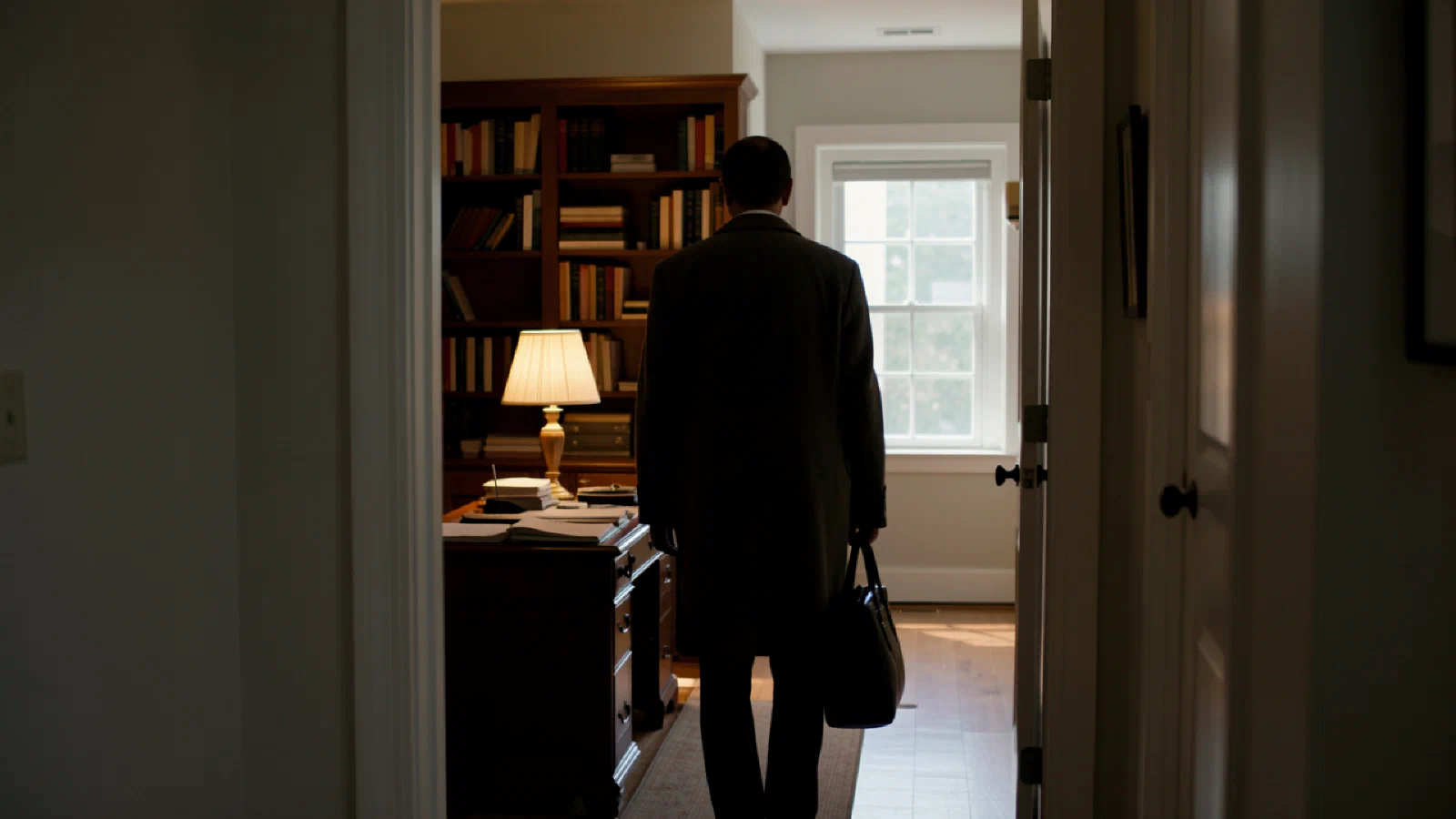
I retired on a Friday in June. I remember the Friday because there was a lunch and people said things and someone had ordered a cake with my name on it and the wrong retirement date, which I did not correct because it did not matter. I drove home and it was 2:30 in the afternoon and the house was empty and I sat at the kitchen table and I thought: now what.
I had planned for this. I had a list. Everyone tells you to have a list. I had travel plans and a reading stack and a woodworking project and the garden. I had told people at the lunch that I was looking forward to having time for the things I had never had time for. I believed it when I said it.
The list lasted about five weeks.
What Stopped#
The travel happened. Two trips in the first three months. They were fine. They were not what the list promised they would be. They were something to do for a week, and then I came home, and it was a Tuesday, and the Tuesday had no shape.
The reading lasted longer. I read a dozen books that first summer. Then I noticed I was reading to fill time rather than from interest, and the reading felt different after that. Less like a reward I had earned and more like something I did because the alternative was sitting in a chair and looking at a wall.
The woodworking project is still in the garage. I started it. I stopped. Starting it again has been on my list of things to do for eighteen months.
What stopped, the thing I had not anticipated losing, was not any activity from the list. It was the phone. Not the device. The reason to pick it up. I had spent thirty-one years calling people and being called by people about things that needed doing. Decisions that needed making. Problems that needed solving. The calls were not always pleasant. Some of them were exhausting. All of them had the same quality: someone needed something I knew how to provide, and the call was the mechanism by which the need and the knowledge connected.
The calls stopped because the job stopped. Nobody called. I did not call anyone because I did not know what to say. “How are you” is a question for people who have an answer, and my answer for most of that first year was: I am fine, and the days are very long, and I do not know what I am for.
What Disappeared#
Three things I lost that I had not predicted losing.
I lost the rhythm of the week. Monday through Friday had meant something for thirty-one years. Saturday and Sunday had meant something different. Retirement made every day Saturday. That sounds like a gift until you have lived inside it for three months. Saturday means nothing when there is no Monday.
I lost the experience of being the person who knows. In my career, people came to me with problems that required specific knowledge I had accumulated over decades. I was the person in the room who had seen the version of this problem from 2003, the version from 2011, and the version from 2019, and could tell you which version this was and what had worked the previous times. That knowledge did not disappear when I retired. The room did. Nobody came to me with problems because nobody knew I was there.
I lost the version of myself I recognized. I looked in the mirror and the person was the same. But the person I had been was the person who did the thing I was trained to do, in a place that needed me to do it, with people who relied on the fact that I could. The person in the mirror was not that person. The person in the mirror was a retired man with a woodworking project in the garage and a garden that was doing fine without the attention I was giving it.
The Thing Someone Said#
My daughter said it. She did not say it gently, which is why it landed.
She said: “Dad, you are disappearing.” She said it at Thanksgiving, in the kitchen, while I was drying dishes. I had not said more than a dozen sentences all day. She noticed. She did not ask me about it. She told me about it.
I did not argue. I knew she was right. I had noticed it myself, in the way you notice something you do not want to be true: from the corner, with the lights off, hoping it will look different in the morning. I was sleeping more. I was going out less. I had stopped reading. I had stopped calling the friends I still had. The days had narrowed to a routine that involved the kitchen, the garden, the television, and the bed, and the routine had become the day, and the day had become the life, and the life was smaller than any life I had lived since I was twenty-two years old.
She did not tell me what to do. She told me what she saw. That was enough.
The Absence of Resistance#
Three months after Thanksgiving, someone I knew from a professional association forwarded me an email about the BGO program. I read it. I read the description of the deployment model. I read the description of the expertise matching. I read the part about the Native, the younger partner who would handle the aspects of the engagement that required skills I did not have.
I did not feel motivated. I did not feel inspired. I felt the absence of a reason to say no. Three months earlier, I would have deleted the email. I would have said I was not interested, or I was enjoying retirement, or I would think about it later. Three months earlier, I had resistance. The resistance was made of pride, and the pride was made of the belief that I was fine, and the belief was made of the fact that admitting I was not fine felt worse than being not fine.
By March, the pride had worn through. The resistance was gone. What replaced it was not enthusiasm. It was willingness. Willingness felt different from motivation. Motivation is energy toward something. Willingness is the absence of energy against it. I was willing. That was enough to reply to the email.
The First Session#
The first session was uncomfortable in a way I had not expected.
I had expected to feel out of place, or unqualified, or too old for whatever they needed. I felt none of those things. The organization needed exactly the kind of knowledge I have. The problem they described was a version of a problem I had solved in 2016. My Native, a woman fifteen years out of graduate school, had the data skills to support the analysis. The match was good.
What was uncomfortable was the feeling of being useful again after a period of not being useful. Being useful is a physical sensation. I do not know how else to describe it. There is a feeling in the chest, not pressure, more like warmth, that comes from being the person in the room who sees the shape of the problem before anyone else does and knows, from experience, what it requires. I had not felt it in nineteen months. Feeling it again was like hearing a language I used to speak and realizing I still knew all the words.
The discomfort was in the contrast. The warmth in the chest made me realize how cold the chest had been. I had adjusted to the cold. I had called it contentment. It was not contentment. It was the absence of the thing I am describing now, and I had not known what to call it until it came back.
What Came Back#
The sleep came back first. I did not notice it immediately. My wife noticed it. She said I had stopped shifting at 3 AM, the restless waking that had become my pattern in the first year of retirement. I was sleeping through to 5:30, which had been my work schedule time, and waking without an alarm. The waking was different because the day had a shape again. Tuesday had a shape. Thursday had a shape. The shapes were made of the deployment sessions and the preparation for them and the follow-up after them, and the shapes gave the week its rhythm back.
The phone came back. Not because I was calling people about the deployment, though I was. Because I had something to say when someone asked how I was. “I am working with a community organization on their strategic planning” is not a dramatic sentence. It is a sentence that replaces “I am fine” with something true, and the replacement made me willing to pick up the phone.
The reading came back, but differently. I was reading for the deployment now: case studies, organizational theory, articles my Native sent me about data analysis methods I did not understand but wanted to. The reading had purpose, which made it feel like the reading I used to do when reading was preparation for something rather than a substitute for it.
What did not come back was the career. I am not employed. I am not earning what I earned. I am not in the building I was in for thirty-one years. Those things are gone and I do not miss them in the way I expected to. What I miss, and what I got back, is smaller and larger than the career. It is the experience of knowing something that someone else needs to know, and being in the room where the knowing matters.
What the Data Said#
They told me, when I enrolled, that the AI would be tracking things. Sleep. Activity. Cognitive tests I take on a tablet. Blood work they collect quarterly. I signed the forms. I did not pay much attention.
At my six-month review, my deployment coordinator showed me the data. Sleep quality improved at week seven. She showed me the graph. I looked at it and I knew, from the graph, something I had not admitted to myself from the inside: the sleep had been bad for a long time. Not just since retirement. For two or three years before. The graph showed the baseline and the change, and the baseline was worse than I had let myself believe.
The cognitive tests are stable. I do not know what I expected them to show. I am not smarter than I was. I am not sharper. I am the same. Stable, at 71, in the domains they measure, is what my coordinator tells me is the relevant finding. She says stable is not the default trajectory for people my age who are not engaged. I take her word for it. The data is the data.
What I Came Back For#
I came back for the feeling of the room.
Not the career. Not the title. Not the salary. Not the recognition, though recognition is pleasant and I would be lying if I said it did not matter. I came back for the specific moment when someone describes a problem and I see the shape of it before they finish the description, and I know, from thirty-one years, what it is and what it needs, and the person across the table does not know yet but they will, because I am going to show them.
That is what I came back for. The knowledge that is mine, deployed where it is needed, in a structure that made it possible for a retired man at a kitchen table to become the person in the room again.
The kitchen table is the same table. The man at it is not the same man. The man at it has a Tuesday now. The Tuesday has a shape. The shape is made of expertise in use, and the use is the thing I came back for.
How this article connects to others in Blue Mirror.