How Connection Protects the Brain
Series 12: The Reverse Cascade
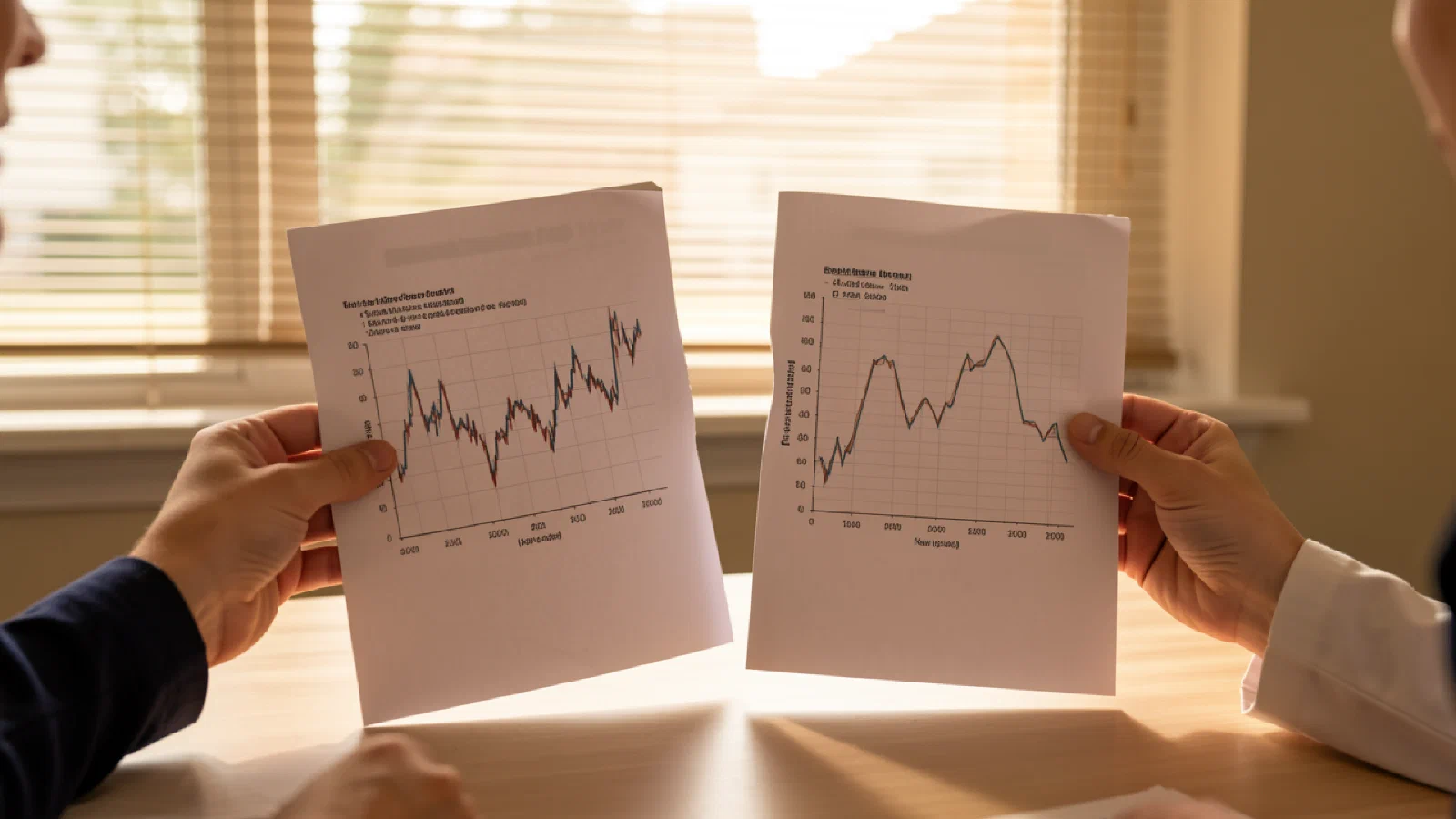
Dr. Marcus Chen pulls up a slide he has shown at eleven conferences. It contains two graphs side by side. On the left, a six-month social contact log from one of his patients at the UCSF Memory and Aging Center: frequency of reciprocal human contact, categorized by depth and duration, plotted week by week. On the right, the patient’s two-year cognitive trajectory, measured through standard neuropsychological testing at six-month intervals. The correlation between the two graphs is visible to anyone in the room.
He has a second slide. It shows the same patient’s MRI, taken at the same baseline. The MRI is normal for age. It predicts a different trajectory from the one the social contact log predicts. The contact log is right. The MRI, in this case, is not wrong. It is looking at different information.
Marcus Chen is 61, a gerontologist who has spent fifteen years studying the relationship between social contact and cognitive trajectory. He can look at a patient’s six-month social contact log and predict their two-year cognitive trajectory with greater accuracy than from their MRI alone. He has shown this finding at conferences and watched the room go quiet. Most of his colleagues believe the MRI. He believes both. The MRI shows what has already happened. The log shows what is happening right now.
What Counts as Contact#
The dose-response relationship for social connection and brain health is more specific than the general advice to “stay social” suggests.
Frequency matters, but not in the way most people assume. The research suggests meaningful benefit begins at several reciprocal human contacts per week. Daily contact is better. The key word is reciprocal: the interaction must flow in both directions. A phone call where one person talks and the other listens produces weaker biological effects than a conversation where both participants are engaged. A checkout-line exchange produces almost none.
Depth matters more than frequency once minimum thresholds are met. A sustained, emotionally engaged conversation over a meal produces stronger physiological effects than three brief phone calls. The mechanism appears to be cognitive load: deeper interactions require more complex processing of another person’s emotional state, perspectives, and needs. That processing is the work the brain benefits from.
Parasocial contact, the one-directional relationship with a television personality, a podcast host, or an AI companion, produces little to no measurable biological benefit. The person watching four hours of television and feeling connected to the characters is not receiving the inflammatory suppression, cortisol regulation, or sleep benefit that reciprocal human contact produces. The feeling of connection is genuine. The biology does not respond to the feeling. It responds to the reciprocity.
The Inflammatory Pathway#
Chronic loneliness elevates inflammatory markers at the cellular level, through a mechanism that has been described across multiple cohort studies with blood biomarker collection at multiple time points.
The mechanism begins in threat detection. The chronically lonely brain maintains a heightened state of social threat vigilance, a conserved response that was adaptive when social isolation meant physical danger. This vigilance state activates the sympathetic nervous system and upregulates inflammatory gene expression through a pathway identified by Steve Cole’s research at UCLA: the conserved transcriptional response to adversity, or CTRA. The CTRA profile shows upregulated expression of pro-inflammatory genes and downregulated expression of antiviral and antibody genes. The body is preparing to fight wounds. It is not preparing to fight viruses.
The downstream consequences of sustained inflammation are specific to the brain. Systemic inflammation accelerates amyloid accumulation, damages blood-brain barrier integrity, and contributes to neurodegeneration through pathways that do not require any direct social cognitive effect of loneliness. The lonely brain is not declining because it is understimulated. It is declining because the body’s inflammatory response to isolation is damaging it from inside.
IL-6, TNF-alpha, and C-reactive protein, the markers most consistently elevated in chronically lonely individuals, are the same markers associated with accelerated cognitive decline in the Alzheimer’s literature. The connection is not coincidental. It is mechanistic.
The Sleep Pathway#
Loneliness disrupts sleep architecture with specific consequences for brain health that run through a pathway most clinicians have not yet connected.
The glymphatic system, described in detail in the neuroscience literature since Maiken Nedergaard’s work beginning in 2012, clears metabolic waste from the brain during slow-wave sleep. The waste it clears includes amyloid beta and tau, the proteins whose accumulation defines Alzheimer’s pathology. Glymphatic clearance operates primarily during deep sleep. Anything that reduces slow-wave sleep reduces the brain’s ability to clear the proteins that, left to accumulate, produce dementia.
Loneliness reduces slow-wave sleep. The mechanism is microarousal: the lonely sleeper exhibits more frequent sleep disruptions, shallower sleep stages, and less time in the deep slow-wave stage where clearance is most active. The effect has been demonstrated in laboratory studies and confirmed in longitudinal observational data. The lonely person who reports sleeping eight hours is sleeping differently from the socially connected person who reports sleeping eight hours. The quality of the sleep, measured by architecture rather than duration, is degraded.
The pathway runs: social isolation produces loneliness. Loneliness disrupts sleep architecture. Disrupted sleep reduces glymphatic clearance. Reduced clearance allows amyloid and tau accumulation. Accumulation produces neuropathology. The pathway connects a social condition to a neuropathological outcome through a mechanism that does not require any assumption about social cognition, emotional wellbeing, or psychological resilience. It runs through sleep.
The Cortisol Pathway#
Social isolation dysregulates the hypothalamic-pituitary-adrenal axis, producing cortisol elevation that, sustained chronically, reduces hippocampal volume. The hippocampus is the region most critical for memory consolidation and most vulnerable to cortisol-mediated damage.
The evidence runs in parallel with the caregiver stress literature. Caregivers, as BML covered in Series 6, show elevated cortisol and reduced hippocampal volume in proportion to their caregiving burden. Isolated older adults show the same pattern in proportion to their isolation. The hippocampus does not distinguish between the sources of the stress signal. Isolation produces it as reliably as caregiving burden.
The cortisol pathway also connects to the inflammatory pathway through shared signaling. Chronic cortisol elevation impairs the negative feedback loop that normally constrains the inflammatory response, meaning that the cortisol-elevated individual is also less able to regulate the inflammation that isolation simultaneously produces. The pathways compound.
What Dr. Chen Prescribes#
Marcus Chen does not have a prescription pad for social contact. He cannot bill for it. No CPT code exists for “loneliness, treated.” When he identifies social isolation as a significant risk factor in a patient’s cognitive trajectory, he refers them to an occupational therapist, a social worker, or a community program. He writes in the chart: “Social isolation is a modifiable risk factor and should be addressed.”
He cannot tell the insurer what the intervention costs. The intervention is a Wednesday lunch. Or a volunteer shift. Or a grandchild’s weekly phone call that lasts more than ten minutes and involves actual conversation. The thing that would modify the risk factor is a relationship, and relationships do not have a billing code.
This is the structural gap the piece has been building toward. The biology is described. The pathways are documented. The dose-response relationship is specific enough to inform clinical recommendations. The clinical infrastructure to act on those recommendations does not exist, because the intervention is social rather than pharmaceutical, and the healthcare system is built to deliver pharmaceuticals.
The AI Social Monitor and the Clinical Record#
The AI social health monitoring that BML described in Series 8 tracks reciprocal contact frequency and quality continuously. It produces, without requiring annual questionnaires or self-report, the social contact data that Dr. Chen’s six-month log captures in snapshot.
When that continuous data feeds into a clinical AI that flags declining social contact as a cognitive risk signal, the Wednesday lunch becomes a clinical recommendation rather than a friendly suggestion. The flag appears in a physician’s dashboard. The decline has a timeline. The intervention has a measurable start point and a measurable outcome window.
The technology does not create the contact. It measures it, and it connects the measurement to a clinical system that can act on it. Dr. Chen’s six-month log predicts the two-year trajectory. Continuous monitoring produces the six-month log in real time. The earlier the signal, the earlier the intervention, and the earlier the intervention, the more function remains to protect.
The Earlier Signal#
Marcus Chen shows the contact log to a new geriatric medicine fellow in his clinic. She studies the graph. She studies the MRI. She asks, with the directness of someone who has not yet learned to hedge, whether he really believes the contact log over the MRI.
He tells her what he tells every fellow. He believes both. The MRI shows what has already happened to the brain. The contact log shows what is happening to the person right now. The structural changes the MRI captures are the downstream consequence of processes that were underway when the social contact log was already registering the signal. The MRI is the later measurement. The log is the earlier one.
Acting on the earlier signal is the intervention. Everything in this piece, the inflammatory pathway, the sleep pathway, the cortisol pathway, describes what happens when no one acts on the earlier signal. Connection protects the brain because disconnection damages it through mechanisms that are biological, measurable, and, if caught early enough, modifiable.
The fellow asks what she should do with this in practice. He tells her to ask her patients who they talked to this week. Not whether they feel lonely. Who they talked to. The answer will tell her more about their two-year cognitive trajectory than the scan she ordered this morning.
How this article connects to others in Blue Mirror.
Sources cited in this article.
- Cole, Steven W., et al. "Social Regulation of Gene Expression in Human Leukocytes." Genome Biology, vol. 8, no. 9, 2007, R189.
- Cacioppo, John T., and Stephanie Cacioppo. "Social Relationships and Health: The Toxic Effects of Perceived Social Isolation." Social and Personality Psychology Compass, vol. 8, no. 2, 2014, pp. 58-72.
- Xie, Lulu, et al. "Sleep Drives Metabolite Clearance from the Adult Brain." Science, vol. 342, no. 6156, 2013, pp. 373-377.
- Holt-Lunstad, Julianne, et al. "Loneliness and Social Isolation as Risk Factors for Mortality: A Meta-Analytic Review." Perspectives on Psychological Science, vol. 10, no. 2, 2015, pp. 227-237.
- Kuiper, Jisca S., et al. "Social Relationships and Risk of Dementia: A Systematic Review and Meta-Analysis of Longitudinal Cohort Studies." Ageing Research Reviews, vol. 22, 2015, pp. 39-57.
- Hawkley, Louise C., and John T. Cacioppo. "Loneliness Matters: A Theoretical and Empirical Review of Consequences and Mechanisms." Annals of Behavioral Medicine, vol. 40, no. 2, 2010, pp. 218-227.