You Are Not the Only One
Series 06: The Caregiver's Own Life
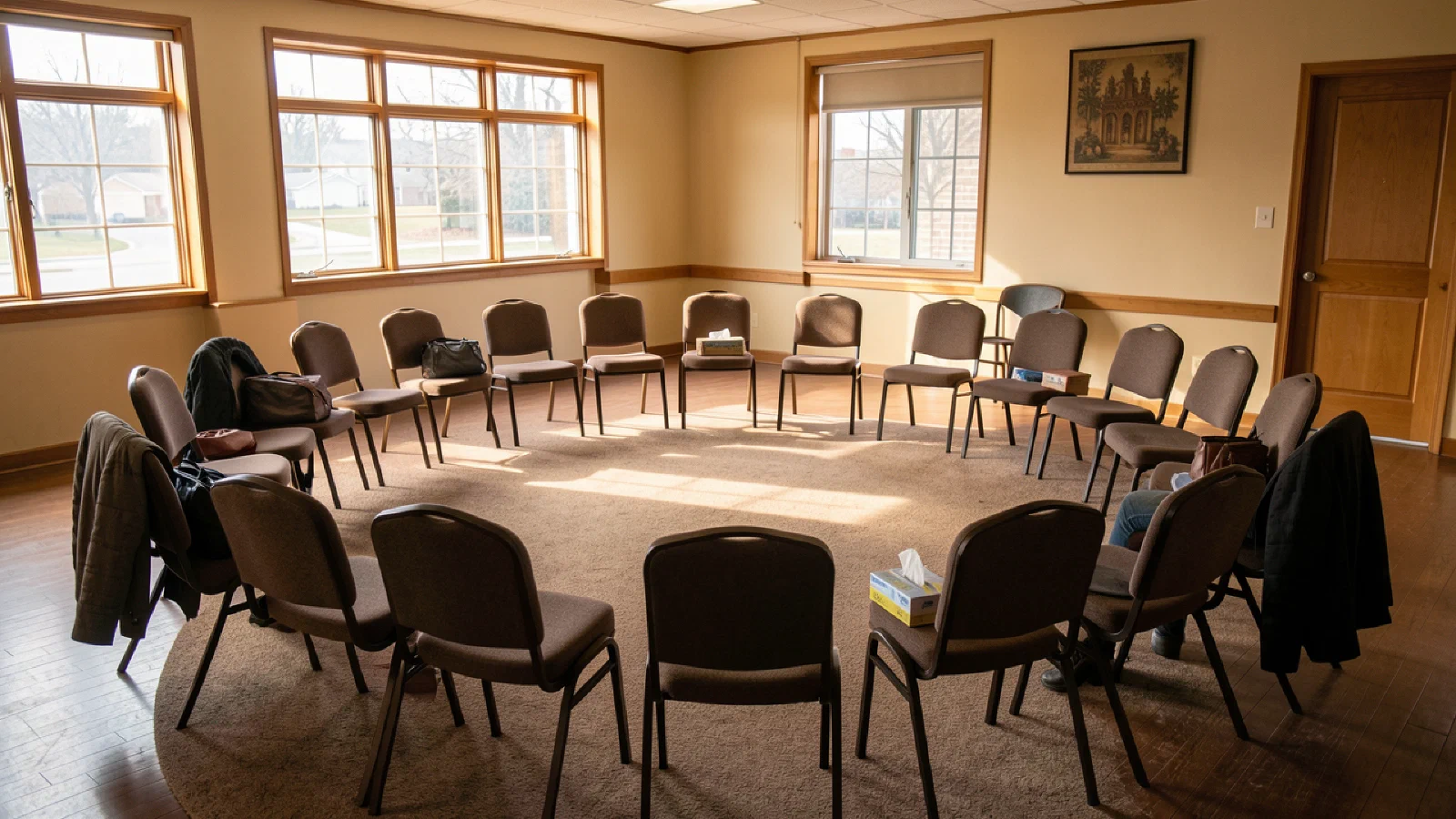
Fifty-three million Americans are currently providing unpaid care to an adult family member. Most of them believe they are the only one who has ever felt this overwhelmed. Most of them have never said that aloud to anyone. Most of them are reading this at a kitchen table, or in a parked car, or in a bathroom with the door locked, because those are the only places in their lives where no one needs anything from them for five minutes.
This synthesis is addressed to the one who has not said it aloud yet.
What This Series Covered#
Series 06 followed the arc of a caregiving life from beginning through end. The arc is not a metaphor. It is a literal trajectory that millions of people are on right now, at different points, each believing they are navigating it alone.
Article 06.01 covered the first year: the legal and financial infrastructure that must be built in the first 90 days, the care team that must be assembled before the first crisis, the emotional reality that does not move through stages but circles back on itself. Diane Kowalczyk, at her kitchen table at 9 PM, writing the list she wished someone had handed her on day one. The article was that list.
Article 06.02 covered care coordination: the caregiver as human switchboard, holding the complete picture of a person’s care because no system holds it for them. Robert Dietrich, managing three specialists who did not share records, a pharmacy, a home health aide, and a daughter in another city. The AI care coordinator that frees the caregiver from information management and returns them to the relationship the management was supposed to protect.
Article 06.03 covered the caregiver’s own health: the neuroscience of sustained stress, the hippocampal volume loss, the elevated cardiovascular risk, the immune suppression. Margaret Holloway, dismissing her own AI health notification because she did not have time for herself. The diabetic A1C that arrived while she was watching someone else’s numbers.
Article 06.04 covered the financial cost: Sylvia Brewster’s $147,000 in lost wages, $23,000 in retirement contributions, the Social Security gap, and the state caregiver stipend she did not know existed for three years. The programs that exist and the distribution system that fails to connect caregivers with them.
Article 06.05 covered respite: Thomas Overbeck in his car in a parking lot, calling the ARCH Network for the first time, his internist’s warning still in his ears. The guilt barrier that prevents caregivers from accessing the care that would keep them alive. The clinical argument that guilt cannot answer.
Article 06.06 covered the placement decision: Frank Russo, driving home from the memory care facility with a feeling he could not name and would not tell his children. The specific signals that indicate when home care has reached its limit. The evaluation criteria for a facility that will see Eleanor as a person, not a diagnosis.
Article 06.07 covered the life after: Vivian Pryce at her kitchen table at 9 AM, the most qualified person for a job that no longer exists. The identity vacuum distinct from grief. The health consequences that surface when the adrenaline stops. And Vivian at her desk, headset on, waiting for the phone, the qualification repurposed into the next version of who she is.
What the Technology Does, Together#
Taken individually, each article described tools that address a specific dimension of the caregiver’s life. Taken together, they describe something more coherent: a caregiver who uses the full suite of available and near-future technology, including AI care coordination, personal health monitoring for both the care recipient and the caregiver, financial planning tools that identify applicable programs, and respite matching systems, has measurably better outcomes than one who does not. The outcomes are better in health, in financial stability, in caregiver longevity, and in the quality of the caregiving itself.
The honest limit is that none of these tools were designed for caregivers. They were designed for individuals managing their own health, their own finances, their own daily lives. They are being adapted for caregiving contexts. The purpose-built caregiver technology platform, one that recognizes the caregiver as both a user and a person at risk, one that monitors the caregiver’s health alongside the care recipient’s, one that identifies caregiver-specific programs and benefits from day one, does not yet exist at scale. It is close. Within one to two years, the integration described across this series moves from concept to deployment. Within three to five years, the caregiver beginning the journey in article 06.01 has access to a coherent platform that addresses all six dimensions this series covered. The caregiver beginning the journey today does not. They have fragments. The fragments help. They are not the same as a system.
What Technology Cannot Do#
Technology can hold the care information so the caregiver does not have to. It can monitor both the care recipient and the caregiver. It can identify programs and benefits the caregiver did not know existed. It can match the caregiver with respite providers. It can model the financial impact of caregiving decisions and build a plan to minimize the damage. It can connect caregivers with communities of people who understand.
It cannot hold a hand at 3 AM. It cannot sit with the person when the medication is not working and the agitation will not stop and the only thing that helps is a voice they recognize saying words they cannot understand but whose tone still means safety. It cannot grieve. It cannot feel the specific weight of watching someone you love become someone you recognize less each month. It cannot carry the guilt, the love, the exhaustion, and the fierce protectiveness that makes a caregiver refuse respite even when their own doctor says the alternative is collapse.
The limit matters. The technology across this series is useful. The relationships it supports are the thing that makes caregiving bearable. A caregiver who has technology and no human community is less supported than a caregiver who has human community and no technology. The order matters. The technology is the supporting infrastructure. The community of people who have been through this, the support group, the friend who brings dinner without being asked, the adult child who flies in for a weekend so the caregiver can sleep, those are the primary infrastructure. Series 07 through 10 of this publication cover the social connection dimension that caregivers need alongside the technology.
The Structural Failure#
This is the section that most of the caregiving literature avoids.
Fifty-three million unpaid caregivers are carrying a cost that the healthcare system should be distributing differently. The country has outsourced elder care to families and called it love. The federal government provides 12 weeks of unpaid leave through FMLA and considers the problem addressed. Nine states have enacted paid family leave. Forty-one have not. Medicaid covers some home and community-based services for people who have depleted their assets to poverty-level thresholds. Medicare, which covers nearly every American over 65, does not cover long-term care. The average female caregiver bears $300,000 in lifetime economic impact. Social Security does not credit caregiving labor.
This is not an argument against love. It is an argument that love deserves infrastructure. The 53 million people providing unpaid care are performing labor that the economy depends on and has systematically refused to compensate, regulate, or support. If unpaid family caregivers stopped providing care tomorrow, the replacement cost at market rates would exceed $600 billion annually. The country does not spend $600 billion on family caregiver support. It spends a small fraction of that and relies on the rest being provided for free, disproportionately by women, disproportionately by people of color, disproportionately by people in lower income brackets.
The technology described across this series is a partial, useful, honestly-assessed response to a structural failure that technology alone cannot fix. An AI care coordinator does not create a national paid family leave program. A financial planning tool does not establish Social Security credits for caregiving labor. A respite matching system does not build the respite infrastructure in the rural county where no adult day program exists within 40 miles. The structural changes that would make caregiving survivable require federal paid family leave, Medicaid expansion for home and community-based services, facility staffing standards with enforcement, and the cultural recognition that unpaid caregiving is work. These are policy decisions, not technology problems.
The Purpose That Follows#
Some caregivers find their way through the identity vacuum of article 06.07 and into the purpose dimension that Pillar IV of this publication describes for the broader aging population. The skills acquired in caregiving, the navigation of complex systems, the coordination of human needs under pressure, the tolerance for ambiguity and loss, the patience that was not a character trait but a survival adaptation, are skills that transfer. They do not retire when the caregiving ends.
Vivian at her desk on a Tuesday morning, headset on, waiting for the phone, is a story about purpose after loss. It is also a story about expertise that the world undervalues and a person who decided to use it anyway. The caregiver support line does not pay well. It does not carry the status of the clinical care coordinator role that Vivian actually performed for eight years without the title. It requires exactly what Vivian has: the knowledge, the patience, and the authority of someone who has been through it.
Not every former caregiver becomes a caregiver support volunteer. Some return to careers that were interrupted. Some find new interests in the time that caregiving consumed. Some sit with the emptiness for a long time before anything fills it, and the sitting is its own form of recovery, and it is not a failure to take a year before the Tuesday has a shape again. The point is not that every caregiver must find purpose in their caregiving experience. The point is that the experience produced something, and the something is real, and it belongs to the caregiver, and nobody gave it to them. They earned it in the hardest years of their lives.
The One Who Has Not Said It Aloud#
Fifty-three million people. The number is so large that it becomes abstract, and the abstraction is the opposite of what this series intended. This series was written for one person at a time: Diane at her kitchen table. Robert checking the portals. Margaret dismissing the notification. Sylvia counting the losses. Thomas in his car. Frank driving home alone. Vivian at 9 AM with nothing to manage.
The one who has not said it aloud. The caregiver who has been carrying this alone, who answers “fine” when asked how they are doing, who has not told anyone about the 3 AM fear or the guilt about wanting a Saturday to themselves or the moment last week when they looked at the person they love and did not recognize the feeling they had and were ashamed of it.
Say it. Not to an AI. Not to this article. To a person who has been through it. The most powerful technology in this series is not the AI care coordinator or the health monitoring system or the financial planning agent. It is the person on the other end of the phone who has lived this and knows what you are carrying without you having to explain it.
Vivian is on the phone at 9 AM on Tuesday. She knows. Call.
How this article connects to others in Blue Mirror.
Sources cited in this article.
- AARP Public Policy Institute. "Caregiving in the United States 2020." AARP and National Alliance for Caregiving, May 2020.
- Chari, Amalavoyal V., et al. "The Opportunity Costs of Informal Elder-Care in the United States: New Estimates from the American Time Use Survey." Health Services Research, vol. 50, no. 3, 2015, pp. 871-882.
- Reinhard, Susan C., et al. "Valuing the Invaluable: 2023 Update." AARP Public Policy Institute, 2023.
- National Academies of Sciences, Engineering, and Medicine. Families Caring for an Aging America. The National Academies Press, 2016.
- Feinberg, Lynn Friss. "Breaking New Ground: Supporting Employed Family Caregivers with Workplace Leave Policies." AARP Public Policy Institute, 2019.