Finding Respite When There Is None
Series 06: The Caregiver's Own Life
Thomas Overbeck is 71, and his internist just told him something he did not want to hear. “At this rate, you will not survive your wife’s disease.” Thomas has been caring for his wife Patricia, 70, who has moderate Alzheimer’s, for three years. Patricia requires supervision around the clock. Thomas has not left the house for more than two hours at a time in fourteen months. His blood pressure is 168/94. His weight has dropped twelve pounds in six months. He sleeps in fragments.
He did not believe his internist until she showed him the numbers. The blood pressure readings over eighteen months, climbing. The weight trend, falling. The sleep data from his wearable, confirming what Thomas already knew but had decided was not important. He was not important. Patricia was important. His internist disagreed.
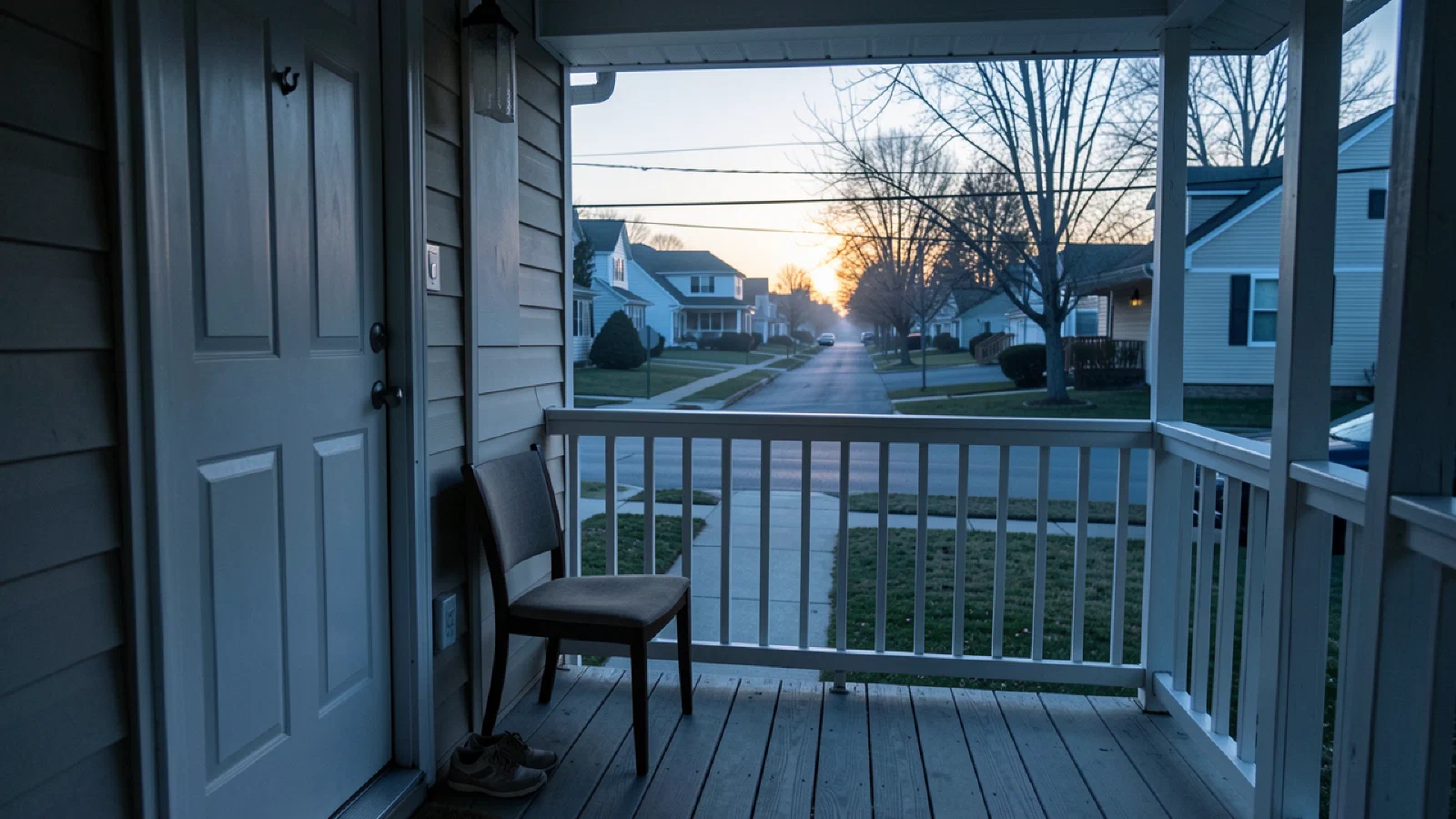
We meet Thomas on the afternoon he calls the ARCH National Respite Network for the first time. He dials the number sitting in his car in the parking lot of the medical building, because the car is the only place he has been alone in fourteen months.
What Respite Is, Practically#
Respite care is temporary relief for a primary caregiver. It comes in four forms, each serving a different need and requiring a different level of preparation.
Adult day programs provide structured activities and supervision during daytime hours, typically five to eight hours a day, one to five days a week. For a person with moderate dementia, these programs offer social contact, cognitive stimulation through structured activities, meals, and professional supervision. They are the most consistent form of respite for caregivers managing moderate-stage disease. Costs range from $40 to $120 per day depending on location, and many programs accept Medicaid waiver funding.
In-home respite brings a trained caregiver into the home for scheduled hours. This is the gentlest transition for the person with dementia because the environment does not change. In-home respite workers can be arranged through home health agencies, Area Agencies on Aging, or the ARCH National Respite Network. Costs range from $15 to $30 per hour. Some long-term care insurance policies cover in-home respite. Medicaid waiver programs in most states cover a limited number of respite hours per month.
Residential respite provides a short-term stay, typically one to four weeks, in an assisted living or memory care facility. This is the most complete break for the caregiver and the hardest transition emotionally. The caregiver who needs a residential respite stay is usually at the point where the conversation about permanent placement (covered in article 06.06) is approaching. The cost ranges from $150 to $350 per day. Some long-term care insurance policies cover short-term residential respite. VA programs cover it for eligible veterans.
Informal respite networks, family members, neighbors, faith community volunteers, friends, provide relief that does not require professional hiring or program enrollment. The limitation is reliability. The informal network depends on the availability and willingness of people who have their own lives and constraints. The advantage is familiarity: the person with dementia may be more comfortable with a known family member than a professional stranger. The practical advice is to build the informal network before you need it, because asking for help during a crisis is harder than asking for help before one.
What Medicare, Medicaid, and the VA Cover#
Medicare covers respite care only within the hospice benefit. A person enrolled in Medicare hospice is eligible for up to five consecutive days of inpatient respite care in a Medicare-approved facility. Outside of hospice, Medicare does not cover respite. This is the coverage gap that most caregivers encounter and do not expect.
Medicaid covers respite through Home and Community-Based Services (HCBS) waiver programs in most states. Eligibility requires the care recipient to meet Medicaid’s income and asset thresholds, which vary by state but generally require assets below $2,000 (excluding the home and one vehicle). The waiver programs cover a specific number of respite hours per month, typically 20 to 40 hours, with variation by state. Applying for Medicaid HCBS waiver programs is not simple. The waitlists in many states are months to years long. Starting the application early, even before the need is acute, is the practical advice.
The VA covers respite care for caregivers of eligible veterans through the Program of Comprehensive Assistance for Family Caregivers and through the VA’s own adult day health care programs. The coverage includes up to 30 days per year of respite care. Eligibility depends on the veteran’s service-connected disability status.
State-specific programs through the Lifespan Respite Care Program, funded by the federal Administration for Community Living, exist in 37 states. These programs provide respite care subsidies, caregiver training, and referral services. The ARCH National Respite Network (archrespite.org) maintains a state-by-state directory of available programs and is the single best starting point for any caregiver looking for respite options.
The Guilt Barrier Named#
Thomas did not call the ARCH Network for fourteen months because he did not trust anyone else with Patricia. Because Patricia becomes agitated when he leaves. Because accepting help felt like admitting he was not enough.
Each of these is real. None of them is a reason not to get respite. They are reasons it is hard to get respite, which is different.
The belief that no one else can provide adequate care is common among caregivers and almost always overstated. Professional respite providers are trained for the specific behaviors and needs of people with dementia. They have managed agitation, wandering, sundowning, and refusal behaviors in hundreds of clients. Thomas is an expert on Patricia. He is not an expert on dementia care in general. The respite provider brings expertise he does not have, and Thomas brings knowledge of Patricia that the respite provider does not have. The combination serves Patricia better than either alone.
The agitation that occurs when a caregiver leaves a person with dementia is real, documented, and consistently temporary. Studies of adult day program participants show that most people with moderate dementia who display separation anxiety at drop-off settle within fifteen to thirty minutes and engage in activities for the remainder of the session. The caregiver who refuses respite because of separation anxiety is responding to the worst fifteen minutes of a six-hour day and missing the five hours and forty-five minutes that follow.
The belief that accepting help means failing is the one that requires the most direct answer. A caregiver who declines is a care crisis. The person with dementia who loses their caregiver to a heart attack or stroke does not gain anything from the years of uninterrupted devotion that preceded the collapse. Sustainability is not selfishness. It is the condition for continuing. Thomas’s internist gave him a timeline. That timeline is the argument for the phone call he is making from his car.
Technology for Respite Access#
The technology that helps most with respite is not sophisticated. It is informational. The ARCH National Respite Network Locator (archrespite.org/respitelocator) identifies respite providers by state and county. State Medicaid waiver program directories identify coverage options by state. The AI financial and care agent described in Series 02 of this publication can identify respite options, compare coverage programs, and schedule the first appointment, removing the search burden that prevents caregivers from accessing what already exists.
Technology does not provide the respite. It removes the barrier between the caregiver and the respite that is already available. For Thomas, the barrier was not the absence of programs. It was the absence of information about the programs, compounded by the guilt that made searching for them feel like betrayal. The AI agent addresses the first barrier. The clinical argument addresses the second. Neither is sufficient alone. Together, they produce a phone call from a car in a parking lot.
The Transition Plan#
Introducing a person with dementia to respite care requires preparation. The preparation makes the difference between a successful transition and a failed one.
For adult day programs: visit the program without the person first. Assess the staff-to-participant ratio, the activity programming, and the physical environment. Ask whether staff are trained in the specific type of dementia your person has. Provide the program with the life story documentation described in Series 05 (article 05.07) so that staff know who the person is, not just what their diagnosis is. Start with a half-day visit. Stay for the first thirty minutes. Leave for an hour. Return. Extend the duration gradually over two to three weeks.
For in-home respite: have the respite worker visit while the caregiver is still present for two or three sessions before the caregiver leaves. Let the person with dementia become familiar with the new face in a safe context. Brief the worker on routines, preferences, triggers, and the specific communication approaches that work. A written care sheet with the daily schedule, medication times, food preferences, and calming strategies serves both the worker and the person.
The transition is manageable with preparation. It is almost always more manageable than the caregiver feared. The fear is usually about the caregiver’s own guilt, not the person’s actual experience.
Thomas, Four Months Later#
Patricia attends an adult day program three mornings a week. The program specializes in cognitive stimulation for people with moderate dementia. Patricia was agitated the first morning. She settled within twenty minutes. By the second week, she recognized the staff by face. By the third week, she asked Thomas when she was going back.
Thomas sleeps on those mornings. He does not set an alarm. He sleeps until his body wakes him, which is usually three and a half hours after Patricia leaves, and it is the most consolidated sleep he gets in any given week. His blood pressure has decreased to 148/88. It is still too high. It is lower than it was.
He is not cured of his guilt. He still feels it when he drops Patricia off. He still checks his phone twice in the first hour. He is alive, which his internist considers more important than his comfort with the arrangement. He and Patricia have dinner together most evenings. She tells him about the music at the program, and sometimes the details are wrong, and sometimes they are right, and the telling is what matters. The afternoon apart is part of what makes the evening together possible.
How this article connects to others in Blue Mirror.
Sources cited in this article.
- ARCH National Respite Network and Resource Center. "National Respite Locator Service.".
- Administration for Community Living. "Lifespan Respite Care Program." U.S. Department of Health and Human Services, 2024.
- Zarit, Steven H., et al. "Effects of Adult Day Care on Daily Stress of Caregivers: A Within-Person Approach." Journals of Gerontology: Psychological Sciences, vol. 66B, no. 5, 2011, pp. 538-546.
- Gaugler, Joseph E., et al. "Adult Day Service Use and Reductions in Caregiving Hours: Effects on Stress and Psychological Well-Being for Dementia Caregivers." International Journal of Geriatric Psychiatry, vol. 18, no. 1, 2003, pp. 55-62.