The House That Held Us
Series 03: The Home That Knows You
The serving bowl is on the top shelf. It has been there for twenty-two years. It is heavy white ceramic with a blue stripe around the rim, and it held the mashed potatoes at every Thanksgiving until the year I stopped hosting because twelve people at the table became more than I could manage and the turkey became heavier than I could lift from the oven. The bowl is still on the shelf. I have not moved it.
Under the counter, there is a step stool. It has a handle because step stools now require handles, at least the ones that appear when you search for step stools and you are old enough that the algorithm has decided you need a handle. The step stool can reach the bowl. I have used it twice. Both times I held the handle with one hand and the bowl with the other and stood on the second step and thought about what I was doing and came back down carefully. The bowl went back on the shelf both times. I do not need it down here. I do not need it on the shelf either. It is on the shelf because moving it would mean something I have not decided to mean yet.
The Grab Bar#
When the grab bar was installed, it replaced the towel ring. The towel ring is in a drawer in the bedroom now, with a picture hook and a doorknob that was removed during some renovation I cannot date precisely. The grab bar is brushed chrome. It matches nothing in the bathroom. The shower curtain is green. The tiles are cream. The grab bar is a medical device pretending to be a fixture, and it is not a convincing performance.
I think about the towel ring more often than is warranted. The towel ring held a hand towel. It was brass, or brass-colored, and it matched the faucet, which was also brass-colored, and the light fixture, which was also brass-colored, because at some point in the 1990s I matched everything in the bathroom and the matching was a form of control I exercised over the space and the control felt good. The grab bar does not match anything. It is functional. It is, medically, far more important than the towel ring ever was.
This does not stop me from thinking about the towel ring.
The Stairs#
The stairs to the second floor are the same stairs they have always been. Fourteen steps, carpeted in a beige that has darkened unevenly over the years, with a handrail on the right side that my husband installed when the children were small. The children held the handrail going up. I hold it going down.
What has changed is not the stairs. What has changed is the knowledge. I have climbed these stairs thousands of times without counting. I climbed them carrying babies, carrying laundry baskets, carrying boxes of books, carrying nothing, carrying everything, climbing without thinking because the stairs were something the body did while the mind did something else.
Now there is not a count of steps but a count of decisions. Each morning I decide to take the stairs. Each evening I decide to take the stairs. The decision is small and automatic and it is still a decision, and the difference between climbing without deciding and climbing after deciding is the difference the technology made legible. The wearable on my wrist produces a daily fall risk score, and on the mornings when the score is elevated, I notice the stairs. On the mornings when the score is low, I still notice the stairs. I notice them now. The stairs have not changed. My relationship to the stairs is different, and the difference is not the technology. It is the awareness the technology surfaced and the awareness did not go away when I stopped looking at the score.
What the House Remembers#
The kitchen where three children were fed, not well at first and then competently and then well. The bathroom where three children were bathed, two at a time when they were small enough, screaming and splashing and soaking the floor I mopped while they ran wet and naked to their rooms. The room at the end of the hall that was a nursery and then a playroom and then a teenager’s room and then a home office and then a guest room and then the room where I sleep now because the master bedroom is on the second floor and some nights the stairs are one decision too many.
The house holds all of these. The walls do not record them. The house records them in the way that only time records things: by accumulation, by wear, by the marks on the door frame where we measured the children’s height with a pencil, by the stain on the kitchen ceiling from the time the bathtub overflowed, by the patch in the hallway carpet where the dog scratched at the door every morning for eleven years.
The home AI holds something different. It holds when the lights are preferred at what brightness. What temperature corresponds to the best night’s sleep. Whether the front door was opened today. How long I spent in the kitchen. Whether my movement speed has changed since last month. The AI’s knowledge of me is precise and current and entirely without sentiment. It knows what I do. It does not know what any of it means.
The Garden at Three-Quarters#
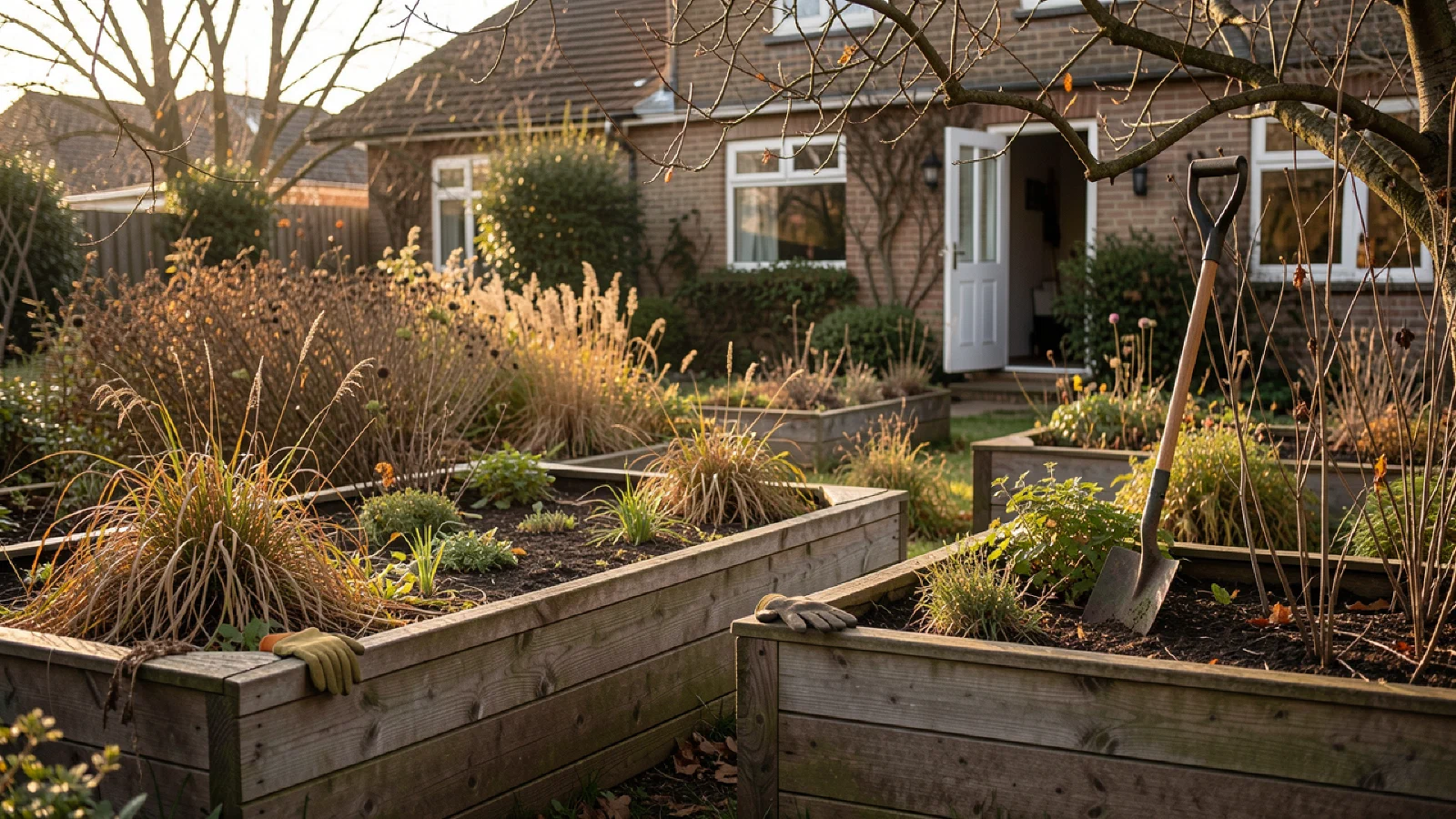
The garden has four beds. I work three of them now. The fourth is the far one, the one against the back fence, the one that requires bending and kneeling and the forty-foot walk back to the path on knees that object to the walk. It still grows things. Whatever seeds the wind brings. Clover and dandelion and something purple I have not identified. I watch it from the path. I do not weed it. I do not plant in it. I do not pretend I will get to it next weekend.
This is not tragedy. I know what tragedy looks like, and the garden at three-quarters is not it. Three beds of tomatoes, herbs, and flowers that I planted and tended and harvested is still a garden. The fourth bed, going to wildflower and weed, is still part of the garden. It is the part I watch rather than work, and watching a garden is a form of participation that the body practices when the hands have done their share.
The garden at three-quarters is still a garden. The house at three-quarters is still a house. The life at three-quarters is still a life, and the fraction is not a diminishment unless I decide to call it one, and I have not decided to call it one.
What “Accommodation” Means#
The house has been modified to accommodate the body that lives in it. The grab bar. The motion-activated lights in the hallway. The sensor under the mattress that tracks my sleep without asking me to do anything. The step stool with the handle. The shower seat that replaced the standing shower I took for sixty years without once thinking about the fact that I was standing.
The body has also been modified. Not by a contractor. By time. The knees that take the stairs differently. The hands that grip the handrail with intention rather than habit. The balance that is fine until it is not and the distinction between fine and not-fine has become a measurement I carry without wanting to.
When the technology makes the house adjust to the body rather than requiring the body to adjust to the house, something shifts in what the word “home” means. The house used to be the thing I moved through. Now the house is the thing that moves with me. The lights come on before I reach the hallway. The temperature adjusts before I feel cold. The system notices patterns I do not notice and prepares the environment accordingly. The accommodation runs in both directions: I accommodate the house’s limitations (the stairs, the top shelf, the far garden bed), and the house accommodates mine (the balance, the vision, the slower mornings).
The meaning of what happened in these rooms has not changed. The daily negotiation between a person and the space she occupies has changed, and the negotiation is what “home” means now, and the negotiation is not worse than what came before. It is different. Different is not nothing. Different is also not tragedy.
What the House Holds That the AI Does Not#
The house holds everything that happened in it. Forty-some years of meals cooked, arguments resolved and unresolved, children raised, a marriage lived, a husband lost, a dog buried under the dogwood tree, a retirement begun, a body changed, a life continued. The house holds all of this in the way that only time holds things: imprecisely, unevenly, in the smell of the wood and the creak of the third stair and the light that comes through the kitchen window at 7 AM in winter.
The AI holds what has happened recently and what it can measure. It holds six months of sleep data. It holds three months of movement speed trends. It holds the temperature preferences it learned by watching me adjust the thermostat over a season. The AI knows me in the way sensors know a person: through pattern, deviation, baseline. It knows that my movement speed on Mondays is 8% slower than on Thursdays. It does not know that Mondays are slower because Mondays are when I think about my husband, who died on a Monday, and the thinking makes the body slow.
Both are kinds of knowledge. They do not overlap. The house’s knowledge is the knowledge of time: accumulation, change, loss, persistence. The AI’s knowledge is the knowledge of measurement: pattern, deviation, prediction. I do not suggest the AI’s knowledge is lesser. I note that it is different. The house knows who lived here. The AI knows who lives here now. The difference is not nothing.
Still Here#
I am still in the house. The grab bar is brushed chrome and matches nothing. The towel ring is in a drawer. The top shelf bowl has not moved. The garden is at three-quarters. The stairs require a decision. The nursery is the room where I sleep on the nights the stairs are one decision too many, and the nursery’s walls are still the yellow I painted when the first child was coming, and the yellow is faded now, and I have not repainted it, and I will not.
The house is still the house. It is held by everything that happened in it. It is held by the body that still moves through it, changed and continuing. The body that climbs the stairs after deciding to climb the stairs. The body that tends three beds and watches the fourth. The body that reaches for the grab bar without thinking about the towel ring, most mornings, and thinks about the towel ring on the mornings when the body remembers what used to be there.
I am still here. The house is still the house. This is not small.
How this article connects to others in Blue Mirror.