The Home You Deserve
Series 03: The Home That Knows You
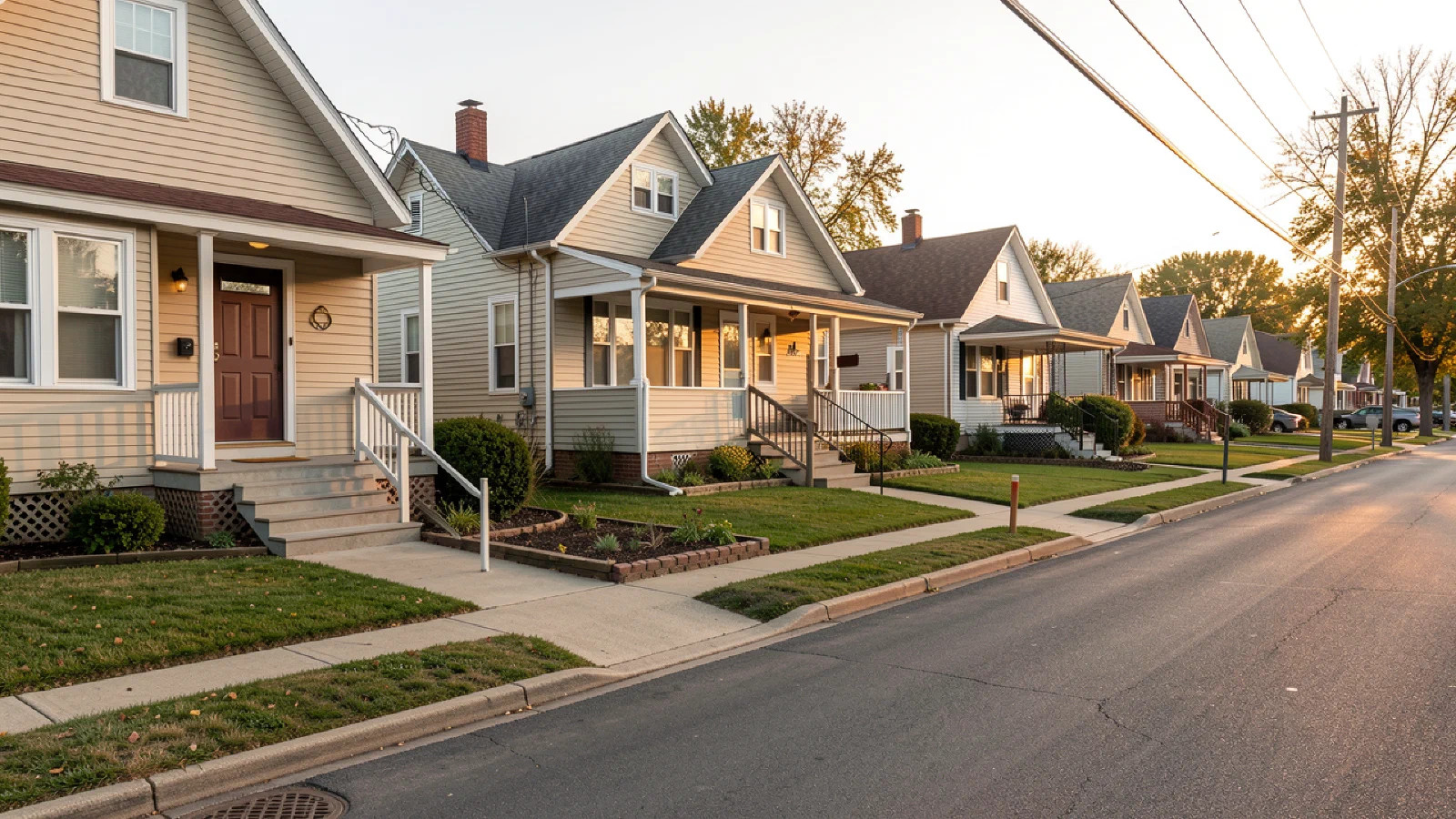
Forty-three houses on a street in a suburb of Columbus, Ohio. Twelve of them have residents over 70 living alone. Three of those twelve have some form of home monitoring. None of the three systems know the other two exist. None of them share data. None of them connect to the other nine houses where a senior lives alone without monitoring. The street has running water, electricity, natural gas, sewage, broadband, and trash collection. It does not have environmental intelligence. It does not know who lives in its houses, whether they are well, whether they fell last night, whether they have eaten today, or whether the person at number 27 has not opened her front door in nine days.
This is the gap the series has described from the inside, one house at a time. The learning home that anticipated Vivienne’s hallway light. The night shift that let Leonard sleep. The grab bar that outperforms the smart floor. The robot in Keiko’s apartment. The diagnosis Dr. Petrov made in four minutes. The spreadsheet on Caroline’s kitchen table. The room that knew Margaret before she arrived. Each article described what the intelligent home can do for one person in one house. This synthesis asks what it could do if it were conceived as infrastructure rather than a consumer product.
What This Series Has Shown#
The home that learns is the foundation the series built in its first three articles. A behavioral model of the person, built over months from multiple sensor streams, produces anticipation rather than reaction. The hallway light at 4 AM. The nighttime monitoring that distinguishes routine movement from concerning behavior. The room-by-room safety modifications that begin with a $12 grab bar and scale upward through AI-integrated systems that respond to the person’s condition on that specific day. The learning home is not a collection of devices. It is a model of the person who lives inside it, and the model is what makes the home intelligent rather than merely connected.
The home that acts is what the series described in its middle articles. Robots that retrieve dropped items and deliver medication. The emotional terrain that assistive technology creates for the families navigating it: liberation for the person using the tool, evidence of decline for the person watching. The clinical intelligence the home generates when its data reaches a physician who knows what to do with it. The home that acts does not wait for instructions. It performs the physical tasks the person’s body can no longer perform, and it sends the behavioral data the physician’s twelve-minute appointment cannot capture.
The home decision is what the series addressed in its final articles. The financial math that makes staying the superior option in many scenarios. The scenarios where staying is the wrong answer. The data that travels when the person leaves the home and enters the next environment, carrying enough personhood data to make the transition less violent than it would be without it. The decision is not permanent. The home extends the window of safe independence. The data it builds during that window extends its usefulness beyond the threshold.
The Three-Part Framework for the Series#
What exists now and is affordable: grab bars, motion-activated lighting, stove shut-off devices, non-slip mats, handheld showerheads, autonomous vacuums, voice assistants. These modifications cost under $500 in most configurations and address the highest-frequency risks in the highest-risk rooms. The grab bar remains the single highest-value safety intervention per dollar spent. Nothing in the smart home category matches it for cost-effectiveness.
What exists now and is expensive: integrated learning-home systems ($2,000 to $8,000 installed plus ongoing subscription costs), bed and room sensor networks, acoustic monitoring platforms, early-generation mobile robots. These systems produce genuine value. The night shift system that lets the caregiver sleep. The learning model that anticipates the 4 AM hallway light. The environmental data that reaches the geriatrician’s pre-visit summary. The value is real. The cost puts it beyond the reach of the people who need it most.
What is genuinely close, in one to two years: mobile retrieval robots entering the US consumer market through specialty channels. Integrated home-health AI platforms at broader price points. Learning-home platforms that combine multiple sensor streams into a single behavioral model without requiring custom installation. FHIR-based pathways for home-generated health data reaching clinical systems. Memory care facility intake processes for behavioral data. Each of these is in development or early deployment. None is standard practice.
What requires structural change, in three to five years: insurance coverage of home AI monitoring as an alternative to facility placement. Building codes requiring sensor infrastructure in new construction. Home robotics at accessible price points. Data portability standards for home-to-facility transitions. Community-level aging-in-place infrastructure funding. Each of these depends on policy decisions that demographic necessity will eventually force. The question is whether the policy arrives before or after the need becomes a crisis.
The Equity Dimension#
An integrated learning home system costs $2,000 to $8,000 for installation plus $50 to $150 monthly for the AI platform subscription. The person who needs it most, the lower-income senior living alone without family nearby, is the person least likely to afford it. The person who can afford it most easily is the person with the social network and family support that partially substitute for what the technology provides.
The grab bar is still the modification the Medicaid-funded home health aide is approved to install. The stove shut-off device is not. The motion-activated lighting is not. The behavioral monitoring system that would have caught Bernard Chung’s depression three months earlier is not. The gap between what Medicaid covers and what the evidence supports is a policy gap that the articles in this series have described without resolving, because the resolution requires decisions that no publication can make.
One month of memory care costs more than two years of home monitoring subscription. This arithmetic is visible to anyone who examines it. It is not visible to the Medicaid program, which covers the memory care facility at $7,000 to $12,000 per month and does not cover the $100 monthly home monitoring subscription that would defer the facility admission by two to four years. The policy is not malicious. It is a legacy of a system designed before the technology existed. The technology now exists. The policy has not caught up.
The Structural Changes That Would Make the Difference#
Insurance coverage of home AI monitoring as an alternative to facility placement. The arithmetic is straightforward: if home monitoring extends safe independence by two years and defers facility admission for that period, the savings to Medicare and Medicaid exceed the monitoring cost by a factor of twenty or more. The policy that would implement this arithmetic requires CMS rulemaking, congressional interest, and the political will to fund prevention rather than crisis. The demographic pressure will eventually produce this will. The question is how many people transition to facilities unnecessarily before it does.
Building codes requiring sensor infrastructure in new construction, the way building codes require smoke detectors, electrical grounding, and ADA-compliant doorways. A house built in 2026 with sensor-ready wiring, structured cabling for home AI integration, and pre-positioned mounting points for monitoring equipment would add $500 to $1,500 to the construction cost. The same house retrofitted in 2036 when the owner turns 75 would cost $3,000 to $8,000 for the same capability. Building the infrastructure into the house costs a fraction of retrofitting it, and the fraction gets smaller at scale.
Zoning policy enabling accessory dwelling unit development. The ADU described in “Staying or Going” is a housing alternative that preserves independence, maintains family proximity, and avoids institutional costs. In many jurisdictions, zoning regulations prohibit ADU construction or make it economically impractical through permitting requirements and setback rules. The policy change is straightforward. The political resistance comes from neighbors and property values. The demographic reality is that the neighbors’ parents will also need somewhere to live.
Community-level aging-in-place infrastructure grants for the modifications that individual households cannot fund. A neighborhood-level program that funds grab bars, motion lighting, and stove shut-off devices for every household with a resident over 70 would cost less per household than a single fall-related hospitalization from any one of those households. The public health math supports community-level intervention. The funding mechanism does not yet exist at scale.
The Community Dimension#
What the forty-three houses on the Columbus street could know if their home AI systems were connected into a neighborhood health monitoring network with appropriate consent and governance. The gastrointestinal illness visible in bathroom behavior patterns across three houses three days before the first physician visit, suggesting an environmental source. The heat wave vulnerability of the senior at number 14 without adequate cooling, identified by the pattern of her activity decline before the temperature becomes dangerous. The social isolation that preceded a hospitalization at number 31, where the front door stopped opening eleven days before the emergency call.
This is a public health argument, not a commercial one. The data that individual homes generate about individual residents has aggregate value when it is analyzed at the community level with appropriate privacy protections. The influenza season that is visible in sleep disruption patterns two weeks before the emergency departments fill. The neighborhood where medication adherence declines in August because the pharmacy closes for renovation and nobody provided an alternative within walking distance. The correlation between social isolation scores and hospitalization rates in a specific census tract.
Community-level data aggregation requires governance structures that do not yet exist. Who controls the data. Who accesses it. What it can and cannot be used for. Whether participation is opt-in or opt-out. How the data is de-identified. What happens when the analysis identifies a specific person at risk. These are not trivial questions, and answering them badly would destroy the trust that answering them well could build. The governance must be designed with the same care as the technology. It has not been designed yet.
The Irreducible Truth#
The smartest home in the world does not replace a human who checks on you. It buys time. It extends safety. It preserves dignity. It generates the data that helps the next environment know you. It catches the decline the twelve-minute appointment cannot see. It retrieves the phone from the floor. It takes the night shift so the caregiver can sleep.
It does not love you.
The person in the house still needs to be known by someone who does. The neighbor who notices the mail accumulating. The friend who calls when she has not heard from you in a week. The daughter who drives twenty minutes because she worries. The community that knows who lives in each house and pays attention when the rhythms change. This is the intelligence that no sensor captures and no AI replicates. Every article in this series has described what the home can do. This one also describes what it cannot.
The home you deserve is not the home most people have. It is not the home most people can afford. It is the home that the architecture of this series describes: a home that knows you, watches for you, acts on your behalf, tells your physician what twelve minutes cannot capture, and carries what it knows about you into whatever comes next. Most people reading this will not have all of it. Some will have parts of it. The parts that cost $12 remain the most important. The parts that cost $12,000 are getting closer. The parts that require a policy change are waiting for the political will that demographic necessity will eventually produce. The parts that require a human being were never technology’s to provide.
How this article connects to others in Blue Mirror.
Sources cited in this article.
- AARP. "Home and Community Preferences Survey." AARP Research, 2024.
- Centers for Medicare and Medicaid Services. "Home and Community-Based Services." , 2025.
- Joint Center for Housing Studies of Harvard University. "Housing America's Older Adults 2023." Harvard University, 2023.
- Genworth Financial. "Cost of Care Survey 2024." , 2024.
- National Council on Aging. "Older Adults and Technology." NCOA, 2025.
- Centers for Disease Control and Prevention. "Cost of Older Adult Falls." CDC STEADI Initiative, 2024.
- U.S. Census Bureau. "Older People Projected to Outnumber Children for First Time in U.S. History." , 2023.
- National Institute on Aging. "Aging in Place: Tips for Making Home Safe and Accessible." NIA, 2024.