The Numbers and the Person
Series 01: The Body's New Partner
Sylvia Brennan is 70, a retired registered nurse from Hartford, Connecticut. She spent 35 years managing other people’s physiological data with competence and equanimity. She read vitals on cardiac monitors, charted oxygen saturation trends, noted the resting heart rate that dipped too low on the night shift and paged the attending without panic. She was good at this. She assumed the skill would transfer.
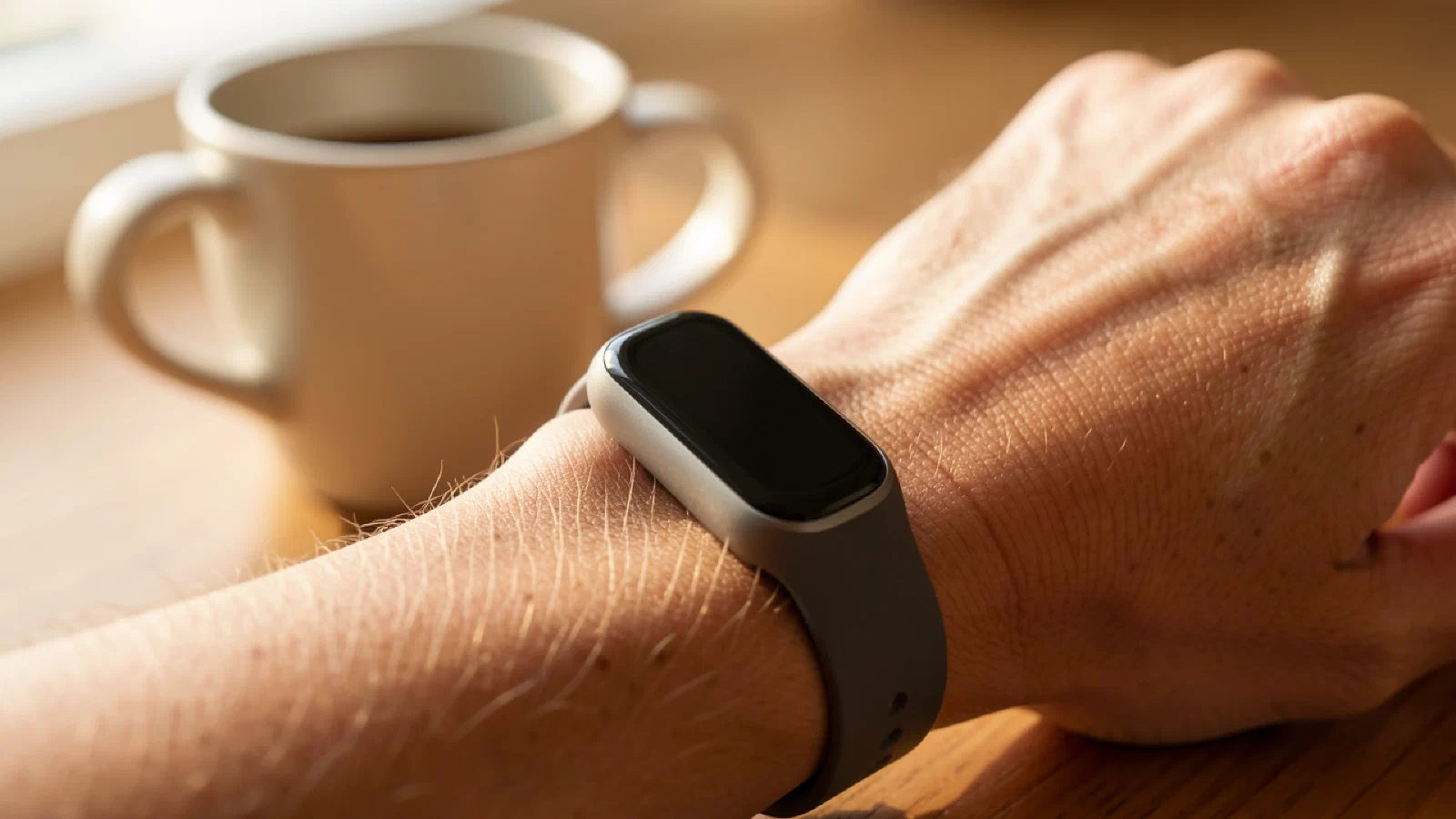
She has worn a health tracker for four months. On a Sunday morning, mid-coffee, she realizes she has checked her resting heart rate eleven times since waking at 7 AM. It is 9:15. Her heart rate is 62. It has been 62 every time she looked. She picks up her cup and finds the coffee has gone cold.
Eleven Times#
The number 62 has not changed. Sylvia knows it will not change appreciably between one sip of coffee and the next. She knows this with the clinical certainty of a nurse who has charted thousands of vital signs and understood, at the bedside, that a resting heart rate measured every fifteen minutes was protocol, not anxiety. She charted it, noted it, moved on. The patient was not the number. The number was one way of looking at the patient.
But the patient was someone else. The number was someone else’s number. Sylvia is discovering, with a precision she did not expect, that professional fluency with physiological data does not produce personal fluency with physiological data about yourself. She can interpret 62. She can tell you what it means in a clinical context, what range is normal for a 70-year-old woman with her medication profile, what deviation would concern her. What she cannot do, this morning, is look at the number and feel nothing. Eleven times is not a clinical assessment interval. Eleven times in two hours is something else.
What the Data Cannot Tell You#
Her resting heart rate is 62. The number does not contain the quality of the sleep that produced it: the dream about her mother’s kitchen, the stiffness in her left hip that made the first steps to the bathroom an exercise in patience, the five minutes she spent lying still in the dark before deciding the day had begun. The number 62 does not know that Sunday mornings are when Sylvia misses nursing most, not the work but the structure, the sense of being necessary at 6 AM to someone other than the cat.
The metric is real. It measures something true about her body at this moment. It is also partial, and the partiality is not a failure of the technology. No sensor is designed to capture the experience of being Sylvia at 9:15 on a Sunday. The sensor measures a rate. The rate is one dimension of a life that contains dimensions the sensor was never asked to see.
This is not a complaint about the technology. The series this essay accompanies has documented, across seven articles and one synthesis, how much that single dimension can do when it is tracked over time, compared against a personal baseline, and correlated with other data streams. The resting heart rate that caught Carl Brandenberg’s pulmonary embolism was real and saved him from a worse version of the same week. The data has value. The value is not the same as completeness, and the eleven checks before 9:15 suggest that Sylvia is looking for something the number cannot give her: certainty about her own body that the body itself has not offered and the number cannot supply.
The Nurse’s Paradox#
She did not expect this. She expected her professional training to make her a better consumer of personal health data, and in some ways it does. She understands the metrics. She does not panic at normal variation. She knows what atrial fibrillation looks like on a single-lead ECG tracing and can distinguish it from artifact.
What her training did not prepare her for is the experience of being the chart. When the patient was Mrs. DiStefano in room 412, the heart rate was data. Sylvia recorded it, evaluated it, acted on it or filed it, and moved to the next room. Mrs. DiStefano was not reduced by the number because Sylvia saw Mrs. DiStefano every day, knew her face, knew the way she held her water cup, knew things about her that the monitor could not know and did not try to.
When the patient is Sylvia, the heart rate is also data. But it is data about the body she lives inside, and the body she lives inside is the one body she cannot observe from the outside. She cannot be the nurse and the patient simultaneously, and the tracker asks her to be both: the professional who reads the number and the person the number describes. Eleven checks in two hours is the distance between those two roles, measured in the number of times she tried to close it.
Her Mother’s Watch#
Her mother, Grace, wore an activity tracker for six weeks when she was 83. Sylvia had bought it for her. Grace wore it dutifully, reviewed the step count each evening, and then one morning removed it and placed it on the kitchen counter.
When Sylvia asked why, her mother said she wanted one day without numbers. Not a complaint about the technology. Not a rejection. A preference for the experience of her body without commentary. Grace walked to the mailbox that morning at the pace her hips allowed, in the cold air, with the dog, and she did not know how many steps it took and did not want to. She was 83 and she had earned the right to walk without counting.
Sylvia did not argue. She understood, or thought she did. She is less certain now, at 70, that she understood what her mother was choosing. Grace was choosing the privacy of her own body’s rhythms, experienced without observation. That is something real, something the tracker cannot provide, something that is lost the moment the data stream begins, and something that Sylvia, at 9:15 on a Sunday, is starting to miss.
What Is Lost When You Take It Off#
If Sylvia removes the tracker, she loses the baseline her AI has built over four months. She loses the early-warning capability that caught cardiac and metabolic problems for the people she has read about in this series. She becomes, in a specific technical sense, less known by a system that was learning her.
She also gets something back. Not certainty. Not safety. Something harder to name: the experience of her own body without a running score. The heartbeat she feels when she puts her hand on her chest is a different kind of knowledge than the number on the screen. It is less precise, less actionable, less useful in a clinical context. It is also hers in a way the number is not, because the number belongs to the system that generated it and the hand belongs to her.
The Number Is Not You#
The number is a way of looking at you. The looking has value, real and substantial value, as this entire series has shown. The medication interactions caught, the baselines that detected deviation, the correlations surfaced across specialist silos, the clinical encounters returned to their purpose, the falls that did not happen. These are not small things. They are the best version of consumer health self-management that has ever existed.
But the number does not contain the experience of being you. It does not contain the Sunday morning, the cold coffee, the hip that hurts, the dream about the kitchen. Checking it eleven times before 9:15 AM is probably the monitor managing you rather than the other way around, and knowing that is worth something, even if knowing it does not change what you do tomorrow morning. Knowledge of a habit and the end of a habit are not the same thing. Sylvia knows this about her patients. She is learning it about herself.
The data serves you. You are not required to serve the data. The difference is easier to state than to live. She will probably check again before she finishes this cup of coffee, because the cup has gone cold again, and the number is right there on her wrist, and 62 was the answer every time but the question has never been about the number.
How this article connects to others in Blue Mirror.